



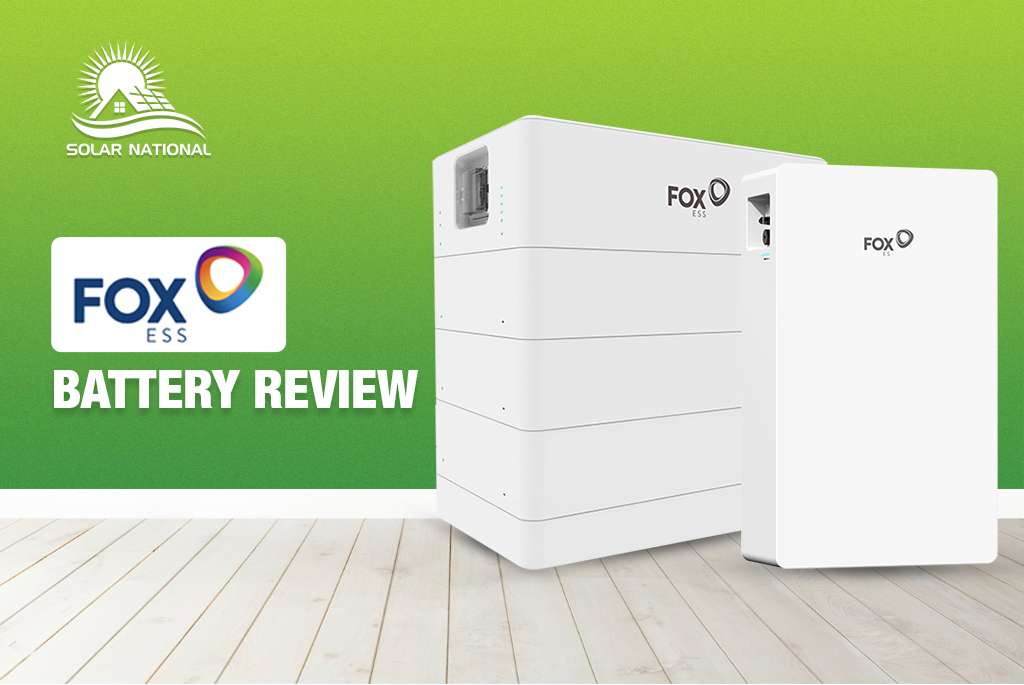
Fox ESS has gone from a name most homeowners had never heard of to one of the top ten battery brands in Australia in the space of about three years. The reason is simple: stackable modular batteries at a price several thousand dollars below Tesla, BYD and the other premium players, backed by one of the biggest industrial groups in the battery supply chain.
We install Fox ESS battery systems across Sydney, so this review is written from the tools, not from a spec sheet. Below we cover the current 2026 model range including the new CQ6, what these batteries cost in Sydney after the federal rebate, what they do well, and the things we tell customers to watch out for before they sign anything.
The short version: for most Sydney homes wanting affordable, expandable storage that lifts night-time solar self-consumption, Fox ESS is a strong value pick. It is not the right choice for every home, and we explain the exceptions further down.
What we’ve seen installing Fox ESS in Sydney
Spec sheets only tell you so much. Here is what stands out once you are actually installing and supporting these systems:
- Installation is tidy. The battery modules stack in series with pre-made cabling between the inverter and battery, so there is less to go wrong on install day and the finished job looks clean on the wall.
- The footprint is small. A full stack holds a lot of storage in a single narrow tower. Customers with tight garage or side-passage space regularly choose Fox for this reason alone.
- The FoxCloud app holds up. Setup is quick, the interface is straightforward, and customers can load their electricity rates into it to track actual dollar savings, not just kWh figures.
- Local support exists and answers. Fox ESS runs an Australian office in Springvale, Victoria (1300 377 369), so warranty and technical queries are handled locally rather than routed offshore.
About Fox ESS: the company behind the battery
A battery warranty is a ten-year commitment, so the company behind it matters as much as the hardware.
Fox ESS was founded in 2019 in Wenzhou, China, as a subsidiary of Tsingshan Group, one of the world’s largest producers of nickel and stainless steel. Tsingshan’s sister company REPT manufactures the lithium cells that go into Fox batteries, which means Fox controls its supply chain from raw material through to finished product. That vertical integration is the honest explanation for how Fox prices its batteries below most competitors without cutting corners on hardware.
Key company facts:
- Founded: 2019, Wenzhou, China (Tsingshan Group subsidiary)
- Financial standing: Forbes Global Unicorn since May 2023 (valued above US$1 billion); added to the BloombergNEF Tier 1 energy storage manufacturer list in Q4 2024
- Australia: inverters since 2021, batteries CEC-approved since 2022, EV chargers since 2024
- Australian office: 53 Willow Avenue, Springvale VIC 3171, phone 1300 377 369
BNEF Tier 1 status is worth pausing on. It is not a marketing award. It reflects demonstrated manufacturing scale, financial stability and quality management, and reaching it within five years of founding is rare.
The fair counterpoint: seven years is still a short track record next to Sungrow, BYD or Tesla. We cover what that means for buyers in the watch-outs section below.
Fox ESS battery models in Australia
The Australian line-up has expanded quickly. These are the models that matter in 2026.
Fox ESS CQ6: the new flagship
The CQ6 is the battery most of our 2026 Fox quotes are built around. It replaced the EQ4800 as the pick for new installs because it stores more per module, carries a longer warranty, and adds a safety feature no other battery at this price point offers.
- 5.99 kWh usable capacity per module
- Configurable from 2 to 14 modules in a single stack, up to 83.86 kWh per stack
- Up to three stacks in parallel with the H3 Plus inverter (up to 251.58 kWh) for large homes and commercial jobs
- Built-in aerosol fire suppression module, thermally activated at 170°C
- 12-year warranty with 70% capacity retention
- LiFePO4 chemistry, IP65 rated, aluminium casing
Fox ESS EQ4800: the proven modular workhorse
The EQ4800 built Fox’s reputation in Australia and remains a solid choice, particularly where budget is the deciding factor.
- 4.66 kWh usable per module, 100% depth of discharge
- Stacks from 2 to 9 modules (9.32 kWh to 41.93 kWh)
- CEC approved since 2022, thousands of Australian installs behind it
- 10-year warranty, round-trip efficiency above 95%
- Works with Fox H1-G2, KH, H3-Smart and H3-Pro hybrid inverters
Fox ESS EP11: single-pack simplicity
For households that want 10+ kWh from one unit without a modular stack.
- 10.36 kWh usable from a single pack, expandable to 41.6 kWh in parallel
- Floor or wall mounted, 92 kg, IP65
- 10-year warranty
Fox also sells the EQ5500, EP12 Plus and CQ7 in Australia, along with the EasyCube range seen in some states. If one of these suits your home better, we will tell you at quote stage.
Model comparison at a glance
| CQ6 | EQ4800 | EP11 | |
|---|---|---|---|
| Usable capacity per unit | 5.99 kWh/module | 4.66 kWh/module | 10.36 kWh |
| Maximum capacity | 83.86 kWh per stack (251.58 kWh with H3 Plus) | 41.93 kWh | 41.6 kWh (parallel) |
| Warranty | 12 years, 70% retention | 10 years | 10 years |
| Fire suppression | Built in (170°C activation) | No | No |
| Chemistry | LiFePO4 | LiFePO4 | LiFePO4 |
| Best for | New installs, three-phase, big future expansion | Budget-focused modular | Fixed large capacity |
Fox ESS battery prices in Sydney
Solar National supplies and installs Fox ESS EQ and CQ systems across Sydney with the federal rebate applied at point of sale. No paperwork on your end. Prices include CEC-accredited installation, the Fox hybrid inverter, FoxCloud app setup and the full manufacturer warranty.
| Model | Capacity | Full price | Federal rebate | You pay |
|---|---|---|---|---|
| Fox ESS EQ | 14.4 kWh | $6,500 | -$3,840 | $2,660 |
| Fox ESS EQ | 19.2 kWh | $7,000 | -$4,640 | $2,360 |
| Fox ESS EQ | 24 kWh | $7,500 | -$5,440 | $2,060 |
| Fox ESS EQ | 28 kWh | $8,000 | -$6,080 | $1,920 |
| Fox ESS EQ | 33 kWh | $9,200 | -$6,280 | $2,920 |
| Fox ESS EQ | 38 kWh | $10,400 | -$6,480 | $3,920 |
| Fox ESS EQ | 41.9 kWh | $11,600 | -$6,640 | $4,960 |
| Fox ESS CQ | 17.9 kWh | $7,000 | -$4,440 | $2,560 |
| Fox ESS CQ | 23.9 kWh | $8,000 | -$5,400 | $2,600 |
| Fox ESS CQ | 29.9 kWh | $9,000 | -$6,160 | $2,840 |
| Fox ESS CQ | 35.9 kWh | $10,800 | -$6,400 | $4,400 |
| Fox ESS CQ | 41.93 kWh | $12,000 | -$6,640 | $5,360 |
| Fox ESS CQ | 47.92 kWh | $14,000 | -$6,880 | $7,120 |
Per usable kWh, that puts Fox among the cheapest reputable LFP batteries available in Australia. A Tesla Powerwall 3 delivering 13.5 kWh typically lands between $8,000 and $11,000 after rebate; the Fox EQ delivers 14.4 kWh for well under half that.
Prices current as at July 2026 and subject to change with rebate step-downs. Site-specific factors such as switchboard upgrades or long cable runs are quoted upfront, not added later.
The federal battery rebate in 2026: what changed on 1 May
The Cheaper Home Batteries Program launched on 1 July 2025 and initially cut roughly 30% off eligible battery costs through Small-scale Technology Certificates.
From 1 May 2026 the rebate moved to a tiered structure. The subsidy now steps down over time as national installation volumes hit set thresholds, with further reductions scheduled every six months. In practice, a typical residential system still receives close to the original support level on most of its capacity, but the direction is one way: the rebate shrinks the longer you wait.
To qualify, your system must be between 5 kWh and 100 kWh, on the Clean Energy Council approved product list, and installed by a CEC-accredited installer at a residential or eligible small business property. All Fox ESS models we install meet these requirements, and Solar National handles the rebate at point of sale.
NSW households can stack the VPP connection incentive on top: roughly $550 for a 10 kWh system and up to about $1,500 for larger systems, paid for connecting your battery to a virtual power plant. One note on that below.
What Fox ESS does well
Value per kWh. This is the headline. Nothing else with CEC approval, BNEF Tier 1 backing and a local support office comes close on price per usable kilowatt-hour.
Genuine modularity. Start with a smaller stack and add modules when an EV arrives or the kids’ gaming rigs push evening usage up. Expansion connects to the same inverter without a system overhaul.
Safety-first chemistry, and now hardware. LiFePO4 cells handle Australian summer heat far better than the NMC chemistry in some premium batteries, and the CQ6’s built-in fire suppression is a first at this price point.
Compact, clean install. A 40+ kWh system fits in one narrow stack where other brands need two or three separate towers.
A surprisingly good app. FoxCloud 2.0 shows live energy flows, historical data and dollar savings once you load your tariff. FoxCloud 3.0 is on the way.
What to watch out for
Backup power is a design choice, not a default. A Fox battery does not automatically keep your lights on in a blackout. Backup requires an EPS configuration, a dedicated backup circuit and sometimes switchboard work, and most systems back up selected circuits only: lights, fridge, internet, a few power points. If blackout protection matters to you, raise it at quote stage, not after installation. This is the single most common thing battery buyers miss, with any brand.
Ecosystem lock-in. Fox batteries pair with Fox hybrid inverters. If you have an existing solar system on a different inverter brand, retrofitting may mean an inverter swap or an AC-coupled configuration, which adds cost. We check this at the site inspection before quoting.
VPP options are thinner than Tesla’s. If earning VPP credits is a core part of your business case, check which virtual power plant programs support Fox ESS in NSW first. The list is growing but is shorter than for Powerwall or Sungrow.
Brand age. Seven years old versus twenty for some rivals. The BNEF Tier 1 listing, Tsingshan’s backing and the Melbourne support office all point the right way, and customer ratings are strong (Fox ESS holds 4.7 stars from more than 220 reviews on SolarQuotes), but anyone who tells you track record does not matter at all is not giving you the full picture. The CQ6’s 12-year warranty goes some way to closing that gap.
What size Fox ESS battery do you need?
Ignore your total daily usage. The number that matters is how much power you use between sunset and sunrise, because that is what the battery covers.
| Overnight usage | Suggested system | Typical household |
|---|---|---|
| 4 to 6 kWh | Small stack (around 10 kWh) | Townhouses, couples, low evening load |
| 7 to 10 kWh | Mid-size (14 to 19 kWh) | Typical family home |
| 11 to 16 kWh | Larger stack (24 to 33 kWh) | Big homes, ducted aircon, pool pump |
| 17 kWh+ | Large CQ6 stack (35 kWh+) | EV charging overnight, three-phase homes |
Add headroom if an EV or a switch away from gas is on the horizon. Our team sizes every solar battery installation in Sydney from your actual interval data rather than a guess, which is the difference between a battery that pays itself off and one that disappoints.
Fox ESS vs Tesla Powerwall 3 vs Sungrow
| Fox ESS (CQ6/EQ) | Tesla Powerwall 3 | Sungrow SBR HV | |
|---|---|---|---|
| Usable capacity | 4.66 to 5.99 kWh/module | 13.5 kWh fixed | 3.2 kWh/module |
| Max storage | 83.86 kWh/stack | 54 kWh (4 units) | 25.6 kWh/stack |
| Chemistry | LiFePO4 | LiFePO4 | LiFePO4 |
| Cycle warranty | 12 yrs (CQ6) / 10 yrs (EQ) | 10 years | 10 years, 10,000 cycles |
| Fire suppression | Built in (CQ6) | No | No |
| VPP options | Growing, still limited | Widest in Australia | Good |
| Typical 13 to 14 kWh installed, after rebate | $2,600 to $2,700 | $8,000 to $11,000 | $5,500 to $9,000 |
| Best for | Value and scalability | VPP earnings, brand confidence | Existing Sungrow inverter owners |
Our take: if you want the most storage per dollar and room to expand, Fox wins comfortably. If VPP income or the Tesla ecosystem matters most, pay the premium for Tesla Powerwall 3. If you already run a Sungrow SBR HV inverter, staying in that ecosystem is usually the cleaner path, and Sungrow’s 10,000-cycle warranty is the strongest in this comparison. We install all three, so the recommendation follows your usage data, not our stock levels.
Our verdict
Fox ESS in 2026 is the value benchmark in Australian home batteries. The CQ6 in particular fixes the two criticisms that used to hold the brand back: the warranty (now 12 years) and the premium-feature gap (now with built-in fire suppression and huge expansion headroom). The remaining trade-offs are real but manageable: a shorter brand history than the legacy players, an inverter ecosystem you need to plan around, and thinner VPP support.
For a Sydney household with solid daytime solar generation and consistent evening usage, a properly sized Fox ESS system is one of the fastest-payback batteries you can put on your wall right now, especially while the federal rebate remains at current levels. Where a different brand suits your situation better, we will tell you that at the quote, in writing. Get a free quote and rebate assessment for your home.
Frequently asked questions
Is the Fox ESS battery any good for Australian homes?
Yes, provided it is sized and installed properly. LiFePO4 chemistry handles Australian heat well, the modular design scales with your needs, and the price per kWh is among the lowest of any CEC-approved battery. It suits homes with good daytime solar generation and meaningful evening usage.
How long does a Fox ESS battery last?
The CQ6 carries a 12-year warranty with 70% capacity retention; the EQ4800 and EP11 carry 10-year warranties. Cycle life is rated at 6,000+ cycles, which works out to roughly 15 years of daily cycling. Warranties also carry throughput limits, which is why correct sizing matters.
Does a Fox ESS battery work during a blackout?
Only if the system is designed for it. Backup requires an EPS configuration and a dedicated backup circuit, and typically covers selected circuits rather than the whole house. Confirm backup requirements before installation.
Can I add a Fox ESS battery to my existing solar system?
Often yes, but Fox batteries pair with Fox hybrid inverters. If your current inverter is another brand, you may need an inverter upgrade or an AC-coupled setup. A site inspection settles this before any money changes hands.
How much does a Fox ESS battery cost in Sydney in 2026?
Fully installed through Solar National, systems start at $2,660 out of pocket for 14.4 kWh after the federal rebate, ranging up to $7,120 for a 47.92 kWh CQ stack. See the full price table above; the rebate is applied at point of sale.
Is Fox ESS eligible for the federal battery rebate?
Yes. Fox ESS batteries are on the CEC approved product list and qualify under the Cheaper Home Batteries Program when installed by a CEC-accredited installer. Note the rebate moved to a tiered structure on 1 May 2026 and steps down every six months.
What is the difference between the Fox CQ6 and EQ4800?
The CQ6 is the newer generation: bigger modules (5.99 kWh vs 4.66 kWh), a longer 12-year warranty, built-in fire suppression, and much larger maximum capacity (83.86 kWh per stack vs 41.93 kWh). The EQ4800 remains the budget pick with a longer Australian track record.