

Solar Panels Kellyville
Solar Panel Installation in Kellyville
Kellyville has grown fast, and its homes reflect it: large, newer family houses on generous blocks, double-storey builds across the estates, and a wave of townhouses and duplexes around the metro line. These are high-use households, running ducted air conditioning, a pool and often an EV, so bills climb quickly. The flip side is space and capacity, since big modern roofs and, frequently, three-phase power make room for a serious solar system. Solar National designs and installs solar, batteries and inverters across Kellyville and the Hills District for homes, estates and local businesses.
One thing worth knowing about newer Kellyville homes is the three-phase supply many of them have. It works in your favour: you can run a larger system, export more per phase and pair it with a bigger battery, as long as the inverter is matched to it properly. We check your supply and size the system to make the most of it. Ask for a free quote and we will work out what your home can carry.
What Our Clients Have To Say!
Posted on GoogleTrustindex verifies that the original source of the review is Google. Excellent price & install for a Tesla PowerwallPosted on GoogleTrustindex verifies that the original source of the review is Google. Great service and excellent customer support highly recommended. Raj and his team always answer any questions regarding the products and service he recommended the right size of solar panels and battery pack the installation team were professional and punctual.Posted on GoogleTrustindex verifies that the original source of the review is Google. Solar National replied promptly to my enquiry, made helpful suggestions regarding solutions for battery and EV charger and followed up efficiently. I am very happy to endorse this local business.Posted on GoogleTrustindex verifies that the original source of the review is Google. Great communication from start to finish. Installers did a great jobPosted on GoogleTrustindex verifies that the original source of the review is Google. the guys turned up on time, did a nice, neat job installing the batteryPosted on GoogleTrustindex verifies that the original source of the review is Google. Great service and communication Installation was on time with completed without disruption. Highly recommend
Residential and commercial solar in Kellyville
Kellyville’s estates are full of large homes with the appliances to match, so our residential solar service tends to design bigger systems here, sized to cover heavy daytime and evening use and paired with storage. For the many homes fitted with a builder-grade or undersized setup, we also handle upgrades, swapping a small system for one that actually matches the household.
Businesses across the area, from the retail around the metro and Kellyville Village to trade and light-industrial premises, run daytime loads that solar suits well. Our commercial solar team designs three phase systems and battery packages to a business’s demand and roof.

Solar Panels in Kellyville
Newer estate roofs are often split across several faces and pitches, and a system only performs if it is laid out for that rather than dropped on in a single block. We plan the array face by face with high-output tier 1 panels so each section pulls its weight. Choose from premium brands in our solar panel range, including REC, Trina, Jinko and Aiko, backed by 25 year product and performance cover.

Inverters in Kellyville
On a three-phase home with a split estate roof, the inverter choice really matters. We fit three-phase inverters where the supply allows, which balances the system across phases and lifts how much you can export, and we leave headroom for a battery later. Our inverter range spans Fronius, Sungrow, SolarEdge, GoodWe and SMA, with app monitoring and a 10 year warranty on each.
Solar Batteries in Kellyville
With big evening loads from cooling, cooking and EV charging, a Kellyville home benefits from storing its daytime solar rather than sending it to the grid cheaply. A battery covers that evening peak and keeps the house running through the outages that hit the north-west in summer storms. Where a home has three-phase supply and a larger system, we can size storage generously to match. From the full battery range we pick a unit that fits your usage:
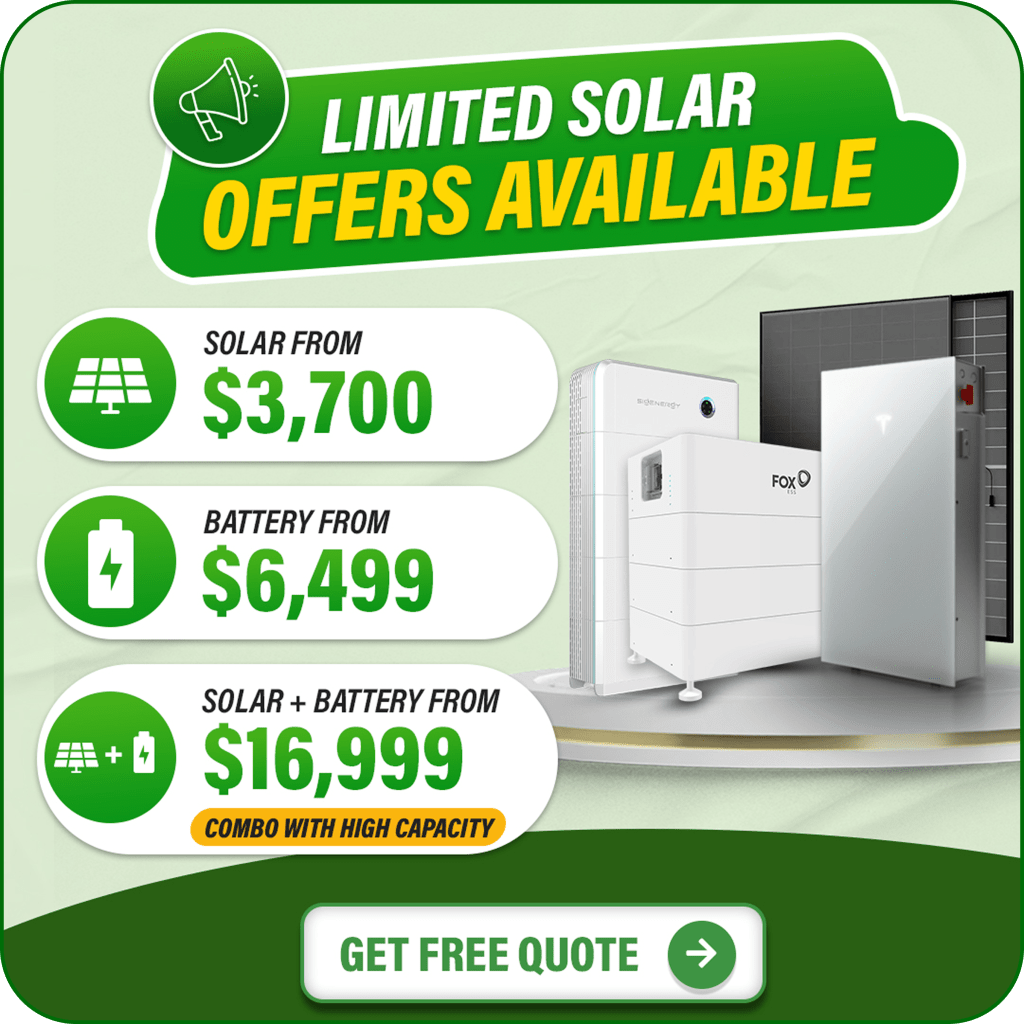
Tesla Powerwall 3: 13.5 kWh with an integrated inverter and whole-home backup, stackable as you need more. Sigenergy SigenStor: modular and expandable, with EV charging that suits a family driveway. BYD Battery-Box: high-voltage stacks for the larger loads common in Kellyville homes. Sungrow, GoodWe ESA, Fox ESS, AlphaESS, SAJ and Neovolt: hybrid and all-in-one options across the budget range.
Why choose Solar National
We are a Sydney-based, locally owned installer with Clean Energy Council accredited teams, and the crew that quotes your Kellyville system installs it. We are a NETCC Approved Seller, back every job with a 10 year workmanship warranty, and manage the Endeavour Energy connection paperwork for you. Finance options are there if you would rather pay from the savings, and there is more on our about us page.
Solar Rebates Kellyville
The federal incentives bring the upfront cost of a Kellyville system down before you pay a cent. Panels are discounted through the small-scale technology certificate (STC) scheme, home storage through the federal Cheaper Home Batteries Program, and there is an extra payment for joining a virtual power plant. The battery discount reduces on a set schedule, so an earlier install keeps more of it. For the current amounts and eligibility, see our battery program changes and NSW solar rebates guides, and we confirm your figures on the quote.
Ready to start? Browse our recent installs, read how it works, then call 1300 179 949 or request a free quote.
We Select The Most Reliable & CEC Approved Products


Nearby suburbs we cover
We install right across the Hills District, including Baulkham Hills, Castle Hill and Rouse Hill, along with Bella Vista, Beaumont Hills, Kellyville Ridge and Stanhope Gardens. For the whole region, see our Hills District solar hub, our Sydney solar page, or the full service areas list.
Our Accreditations
Frequently Asked Questions
Many newer Kellyville homes do, and it helps. Three-phase supply lets you run a larger system, spread it across the phases and usually export more. We confirm your supply and match the inverter to it at the quote.
A standard rooftop install is usually exempt or complying development in NSW, so no DA is needed. Kellyville is mostly in The Hills Shire Council, and heritage or conservation-area properties can be an exception, which we check first.
Often it is worth it. Builder-grade systems are usually small and their inverter may not take a battery, so replacing it with a properly sized system tends to pay back quickly, especially with the current battery rebate.
Large estate homes with ducted air conditioning, a pool or an EV commonly suit 10 kW to 13 kW, and more where three-phase power and roof space allow. We size it to your usage at the quote.
Kellyville is on the Endeavour Energy network, which sets export limits, though a three-phase connection usually allows more than single-phase. A battery lets you store anything above the limit for the evening.
The federal STC discount on panels, the federal Cheaper Home Batteries Program on storage, and a payment for joining a virtual power plant. The amounts change over time, so we confirm the current figures on your quote.
For most large households here, yes. Heavy evening use and summer outages make storage valuable, and with a bigger system there is usually plenty of surplus to store. We size it to your home.