


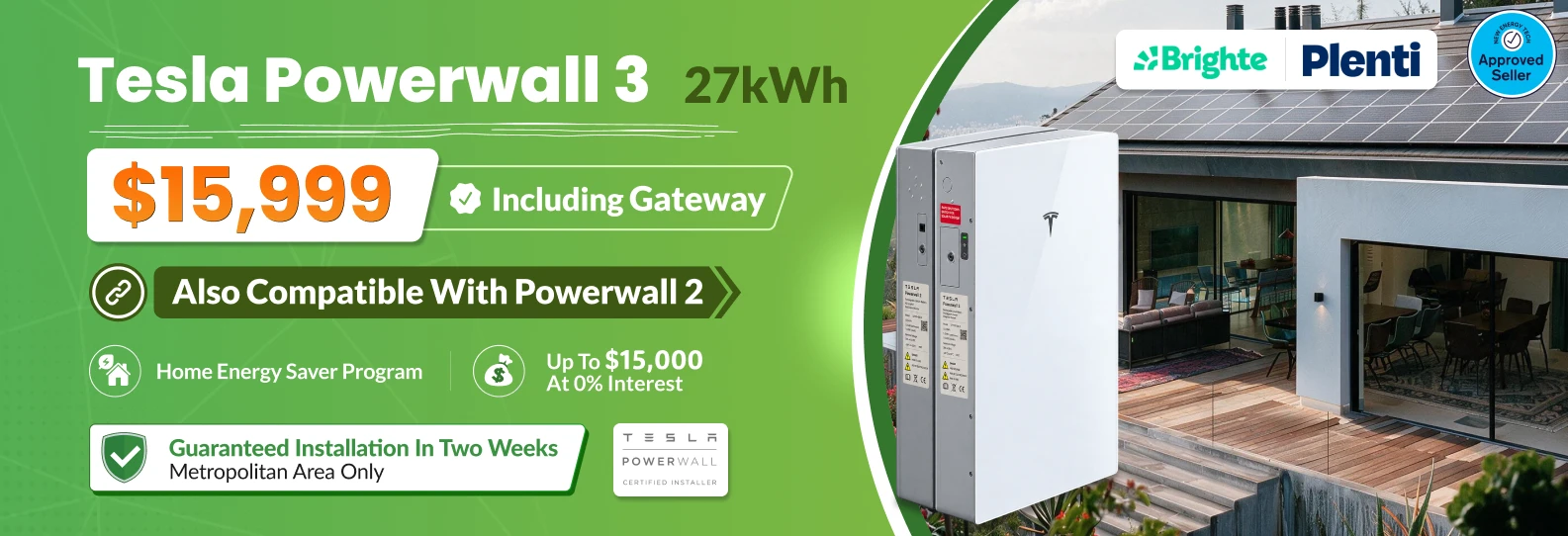
Tesla Powerwall 3 Sydney
Australia's Most Advanced Home Battery System
The Tesla Powerwall 3 is a fully integrated solar and battery system and the most advanced residential solar battery available in Australia today. With over 750,000 Powerwall units deployed globally, Tesla brings proven technology and continued innovation to Sydney homeowners looking to achieve energy independence and reduce their reliance on the grid.
Unlike previous models, the Powerwall 3 features a built-in solar inverter making it a true home energy storage system in a single unit. It supports up to 20 kW DC of solar input and delivers 11.5 kW of continuous AC power, enough to power your entire home including EV chargers and ducted air conditioning. Its DC-coupled battery system design maximises solar energy self-consumption, storing excess solar instead of selling it back at low feed-in tariff rates, and automatically discharging during expensive time-of-use tariff peak periods to save on electricity bills.
Solar National is a Tesla Certified solar battery installer in Sydney and a trusted solar company Sydney homeowners rely on for honest, transparent advice. Our locally owned team of CEC-accredited installers provides complete battery backup power Sydney solutions, from your first consultation through to ongoing support and warranty coverage.
What Our Clients Have To Say!
Posted on GoogleTrustindex verifies that the original source of the review is Google. Excellent price & install for a Tesla PowerwallPosted on GoogleTrustindex verifies that the original source of the review is Google. Great service and excellent customer support highly recommended. Raj and his team always answer any questions regarding the products and service he recommended the right size of solar panels and battery pack the installation team were professional and punctual.Posted on GoogleTrustindex verifies that the original source of the review is Google. Solar National replied promptly to my enquiry, made helpful suggestions regarding solutions for battery and EV charger and followed up efficiently. I am very happy to endorse this local business.Posted on GoogleTrustindex verifies that the original source of the review is Google. Great communication from start to finish. Installers did a great jobPosted on GoogleTrustindex verifies that the original source of the review is Google. the guys turned up on time, did a nice, neat job installing the batteryPosted on GoogleTrustindex verifies that the original source of the review is Google. Great service and communication Installation was on time with completed without disruption. Highly recommend
Why Choose Powerwall 3
The most advanced residential solar battery storage system in Sydney, solar inverter, battery storage, and smart home energy management all in one unit. Save on electricity bills, gain energy independence, and protect your home from blackouts.

Built-In Solar Inverter
No separate inverter needed. This DC-coupled battery system handles solar input, storage, and home power in one unit, reducing cost, complexity, and installation time.

Save on Electricity Bills
Maximise solar energy self-consumption store excess solar during the day and use it during expensive peak tariff periods at night. Sydney homeowners save $1,500–$2,500 per year.

Battery Backup Power Sydney
Switches to backup power in milliseconds during a grid outage. Your home stays on lights, fridge, AC, EV charger and more. Essential during Sydney’s storm season.

LFP Battery Chemistry
Safer, longer-lasting Lithium Iron Phosphate cells rated for 6,000–10,000 cycles, built for Australia’s hot climate and daily cycling. Outlasts older NMC batteries significantly.

Smart Energy Management
The Tesla app automates off-peak charging, tracks real-time solar generation, monitors battery health, and optimises usage around time-of-use tariff rates 24/7.

Increase Property Value
A solar battery system increases your home’s market value and appeal. Energy-independent homes in Sydney sell faster and command higher prices a smart long-term investment.
Technical Specifications
Specifications
Technical Specs
Official specifications for the Australian market sourced from Tesla’s datasheet.
Energy Storage
- Usable Capacity: 13.5 kWh
- Battery Chemistry: Lithium Iron Phosphate (LFP)
- Depth of Discharge: 100%
- Round-Trip Efficiency: 90%+
Power Output
- Continuous Power Output: 11.5 kW
- Peak Power (10s burst): 22 kW
- Heavy Load Start Capability: 185 A LRA
Solar Input
- Max Solar DC Input: 20 kW
- Number of MPPTs: 6 Independent
- MPPT Voltage Range: 150 V – 480 V DC
- Max Input Voltage: 600 V DC
Physical
- Dimensions (H × W × D): 1096 × 755 × 148 mm
- Weight: 130 kg
- IP Rating: IP67
- Operating Temperature: -20°C to 50°C
Warranty
- Product Warranty: 10 Years
- Capacity Retention: ≥ 70% at end of warranty
- Scalability: Up to 40 units
Installation
How We Install Your System
Solar National is a Tesla Certified Installer. Most installations are completed in a single day.
Step 1: Free Consultation & Quote Call 1300 179 949 or submit the form below. Our Tesla-trained advisor will discuss your energy usage and recommend the right system for your home no obligation.
Step 2: Site Inspection & System Design We visit your property to check your electrical setup, roof, and available space. We design the system to maximise your solar self-consumption and savings.
Step 3: Permits & Approvals We handle all CEC approvals, grid connection applications, and council paperwork. You don’t need to chase anything, we take care of it all.
Step 4: Professional Installation Our licensed team completes the full installation Powerwall 3, mounting, wiring, switchboard connections, and Gateway setup. Standard install takes 4–8 hours.
Step 5: Tesla App Setup & Handover We configure your Tesla app, set your preferred energy modes, and walk you through the dashboard so you can start tracking your savings from day one.
Step 6: Ongoing Support & Warranty Tesla provides remote diagnostics and automatic software updates. Solar National offers continued after-sales support backed by a 10-year warranty.
Comparison Table
Comparison
Powerwall 3 vs Other Batteries
See how the Powerwall 3 compares to other leading batteries available in Sydney.
Feature | Powerwall 3 | Sigenergy SigenStor | Sungrow SBR HV | BYD Battery-Box |
Capacity | 13.5 kWh | 5–30 kWh | 9.6–25.6 kWh | 5.1–25.6 kWh |
Continuous Power | 11.5 kW | 10 kW | 8 kW | 5 kW |
Built-in Inverter | Yes | Yes | No | No |
EV Charging (V2H) | No | 25 kW DC | No | No |
AI Energy Management | No | Yes | No | No |
Retrofit Friendly | New only | AC+DC | AC | AC |
Blackout Protection | Whole home | Whole home | Yes | Yes |
Warranty | 10 Years | 10 Years | 10 Years | 10 Years |
Price (Installed) | From $13,000 | From $9,000 | From $8,500 | From $9,500 |
Note: Powerwall 3 is best for new solar installations. Sigenergy SigenStor is Australia’s #1 trending battery in 2025 ideal if you want EV charging and retrofit flexibility. Not sure which is right for you? Talk to our team.
Government Rebates
Battery Storage NSW Save Up To 30%
2025 is the best time to install a home battery system in Sydney. Multiple NSW and Federal rebate programs can be combined for maximum savings.
The Cheaper Home Batteries Program gives Sydney homeowners up to $372 per usable kWh off their installation cost. For a 13.5 kWh Powerwall 3, that’s over $5,000 in savings, roughly 30% off. Solar National handles all rebate paperwork for you.
$5,022 Federal Rebate (STC) Cheaper Home Batteries Program up to $372/kWh for eligible systems. Available from July 2025 onwards.
$700+ NSW Peak Demand Scheme Join a Virtual Power Plant (VPP) and claim NSW PDRS incentives upfront. Combine with the federal rebate for maximum savings.
$0 Finance No Upfront Cost Flexible payment plans available. Many homeowners save more per month on bills than their repayment amount.
~30% Off
Our Accreditations

Pricing
Tesla Powerwall 3 Price & Cost Sydney
Tesla Powerwall 3 price in Sydney starts from $13,950 installed and drops significantly after the Federal Government battery rebate. All prices include professional installation by a Tesla Certified Installer, CEC compliance, and 10-year warranty. The typical payback period is 5–7 years, after which your energy savings are pure profit.
| Units | Capacity | Full Price | Govt Rebate | You Pay | Best For |
|---|---|---|---|---|---|
| 1 × Powerwall 3 | 13.5 kWh | $13,950 | $3,700 | $10,250 | Small–medium homes |
| 2 × Powerwall 3 Popular | 27 kWh | $20,850 | $5,900 | $14,950 | Medium–large homes |
| 3 × Powerwall 3 | 40.5 kWh | $28,000 | $6,600 | $21,400 | Large homes / EV owners |
| 4 × Powerwall 3 | 52 kWh | $37,000 | $7,000 | $30,000 | Off-grid / High usage |
* Prices include full installation in Sydney. Govt rebate amounts are estimates based on the Federal Cheaper Home Batteries Program (active July 2025). Final rebate calculated at time of installation. Contact us for exact pricing
Frequently Asked Questions
The Powerwall 3 typically costs $13,000–$15,000 installed. After the Federal Cheaper Home Batteries Program rebate (~30%), this drops to approximately $7,978–$10,000. Contact Solar National for a free personalised quote.
The Powerwall 3 has 11.5 kW of continuous power more than double the Powerwall 2’s 5 kW. It also includes a built-in solar inverter, uses direct DC coupling for better efficiency, and uses safer LFP battery chemistry instead of older NMC cells.
Not easily. The Powerwall 3 is DC-coupled and best suited for new solar installations. If you have an existing AC inverter, the Sigenergy SigenStor or another AC-coupled battery would be a better fit unless you’re planning a full system upgrade.
Yes it automatically switches to backup power within milliseconds of a grid outage. Your lights, fridge, air conditioning, and other appliances keep running without interruption. Essential for Sydney’s storm season.
From July 2025, the Federal Cheaper Home Batteries Program gives ~30% off via STCs. NSW homeowners can also access the Peak Demand Reduction Scheme (PDRS) for joining a VPP. Solar National handles all rebate paperwork for you.
Tesla provides a 10-year product warranty guaranteeing at least 70% capacity retention. Solar National adds a 10-year workmanship warranty on installation. The LFP cells are rated for 6,000–10,000 cycles built to last 15–20 years.
A standard installation takes 4–8 hours and is typically completed in a single day. Our team handles everything permits, installation, grid connection, and Tesla app setup so you’re up and running by end of day.
Yes especially for new solar installations. Sydney’s consistent solar exposure, rising electricity prices, and time-of-use tariffs make the Powerwall 3 one of the smartest investments available. With $1,500–$2,500 in annual bill savings, a 5–7 year payback period, blackout protection, and ~30% off via the federal rebate, the long-term value is significant. It also increases your property value and reduces your carbon footprint.
For most Sydney homeowners, the payback period for a Powerwall 3 is 5–7 years after the federal rebate is applied. With average annual savings of $1,500–$2,500 on electricity bills, the battery pays for itself well within its 10-year warranty period and continues saving money for 15–20 years.
Yes. You can configure the Powerwall 3 to charge from the grid during cheap off-peak tariff periods (typically midnight–6am) and discharge automatically during expensive peak tariff hours. This saves money even without solar panels.
Feed-in tariffs in NSW have dropped to just 5–8 cents per kWh. But buying electricity back at peak rates costs 30–45 cents per kWh. By storing your solar in a Powerwall 3 and using it yourself, you effectively save 30–45c per kWh instead of earning just 5–8c making battery storage far more valuable than exporting to the grid.