


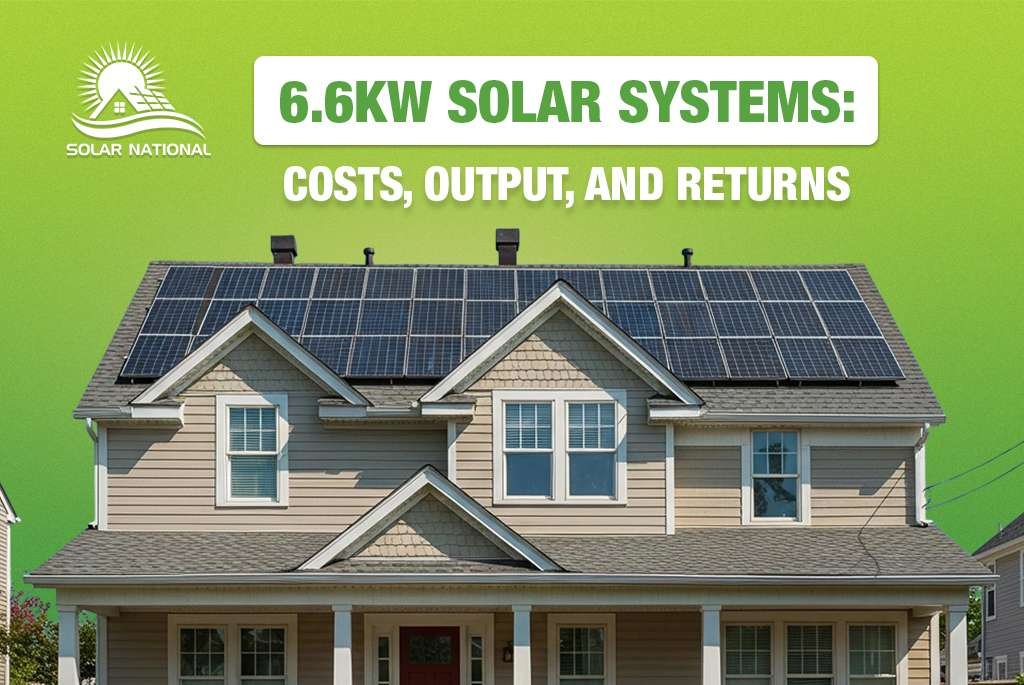
A 6.6kW solar system remains one of the most popular choices for Australian homes because it delivers strong daily output, excellent long-term savings, and a highly affordable upfront cost. It suits a wide range of households, from small families to larger homes with increasing daytime energy use. As electricity prices continue climbing and feed-in tariffs gradually decline, installing the right-sized solar system has become more important than ever.
Why 6.6kW Solar Systems Are So Popular in Australia
A 6.6kW solar system has become Australia’s “sweet spot” for residential installations because it offers:
- A strong balance between upfront price and energy savings
- Compatibility with standard single-phase homes
- Enough output to reduce most households’ grid usage
- Good performance with or without a solar battery
- A size that fits well on most suburban roofs
What Is Included in a 6.6kW Solar System?
Most 6.6kW systems include:
- 16–18 solar panels (usually 370–420W each)
- A 5kW inverter, which is standard for single-phase homes
- Mounting hardware and racking
- CEC-accredited installation
This configuration is approved under the Australian 33% oversizing rule, meaning the solar panel array can exceed inverter capacity by up to one-third without compromising performance.
How Much Roof Space Do You Need?
A 6.6kW system requires around 28–33 m² of usable roof space. Roofs with shading may need alternate placement to maximise daily generation. If space is limited, higher-efficiency solar panels allow the system to be installed on smaller areas.
How Much Power Does a 6.6kW Solar System Produce?
A 6.6kW system typically generates 22–28 kWh per day across most parts of Australia, though results vary with weather, panel placement, and location.
Average Output by City
| City | Average Daily Output |
| Sydney | 23–27 kWh/day |
| Melbourne | 20–24 kWh/day |
| Brisbane | 24–30 kWh/day |
| Adelaide | 23–28 kWh/day |
| Perth | 26–32 kWh/day |
Is a 6.6kW System Right for Your Home?
This system size suits homes using 15–25 kWh/day or families with:
- Air-conditioning
- Electric cooking
- Home offices
- Pool pumps
- Daytime appliance use
- Plans to add a battery
If your usage is above 25 kWh/day, an 8kW or 10kW system may be more suitable.
6.6kW Solar System Costs in Australia
The price of a 6.6kW solar system varies based on equipment quality, warranties, installation conditions, and location.
Typical Pricing Guide
- Budget system: $4,000–$5,000
- Mid-range system: $5,500–$7,000
- Premium system: $7,500–$9,500
Premium systems use Tier-1 solar panels and high-efficiency inverters, offering better durability, lower degradation rates, and improved performance on cloudy days.
What Affects 6.6kW Solar System Price?
- Panel brand and efficiency
- Inverter quality (premium brands include Fronius, SMA, SolarEdge)
- Roof type and height
- Shading and cabling needs
- Government solar rebates (STCs)
- Whether the system is battery-ready
While cheaper systems exist, competitor analysis shows that mid-range or premium systems offer stronger long-term returns.
Expected Savings From a 6.6kW Solar System
Most Australian homes save $1,200–$2,200 per year, depending on:
- Daytime power usage
- Feed-in tariff
- Location
- System quality
- Whether you have a solar battery
Bigger daytime loads — such as running appliances, home offices, or pool pumps — provide the highest savings.
Payback Period for a 6.6kW Solar System
A well-installed system usually pays for itself within 3–5 years. Homes that shift power use to daylight hours often see the fastest returns. Adding a battery increases upfront cost but significantly boosts self-consumption.
6.6kW Solar Systems and Batteries
A 6.6kW system pairs well with batteries ranging from:
- 5–10 kWh for small to medium homes
- 10–13 kWh for high evening usage
A battery helps maximise the value of your solar system by storing excess solar for night-time use and reducing exposure to peak tariffs.
How Much Can a 6.6kW Solar System Reduce Your Bills?
Savings depend on how much solar energy you use directly. A typical example:
- Daily generation: 24 kWh
- Daytime usage: 12 kWh
- Stored/exported: 12 kWh
- Feed-in: 5–10 cents/kWh
- Grid cost offset: 30–45 cents/kWh
This means every kilowatt-hour used during the day saves three to five times more than exporting it.
Is a 6.6kW Solar System Enough for an EV?
A 6.6kW system helps offset EV charging but may not fully cover daily EV energy needs. Charging rates vary:
- Home EV charging: ~7 kW
- Energy used per 100 km: 12–20 kWh
If EV charging is regular, upgrading to 8–10kW may offer better long-term value.
Tips to Maximise a 6.6kW System’s Performance
- Run washing machines, dryers, dishwashers during daylight
- Charge devices and appliances during solar hours
- Monitor system output via inverter app
- Keep panels clear of heavy debris
- Trim shading from nearby trees
- Choose a reputable, CEC-accredited installer
Following these steps ensures better savings and stronger year-round output.
Conclusion
A 6.6kW solar system remains one of the best-value choices for Australian households thanks to its strong daily output, affordable upfront price, and excellent long-term returns. Whether you’re aiming to reduce energy bills, minimise grid reliance, or prepare for future upgrades like a battery or EV charging, this system size offers a reliable foundation. For tailored advice and high-quality solar system installations across Australia, Solar National provides trusted, efficient, and cost-effective solutions designed for long-term performance.