



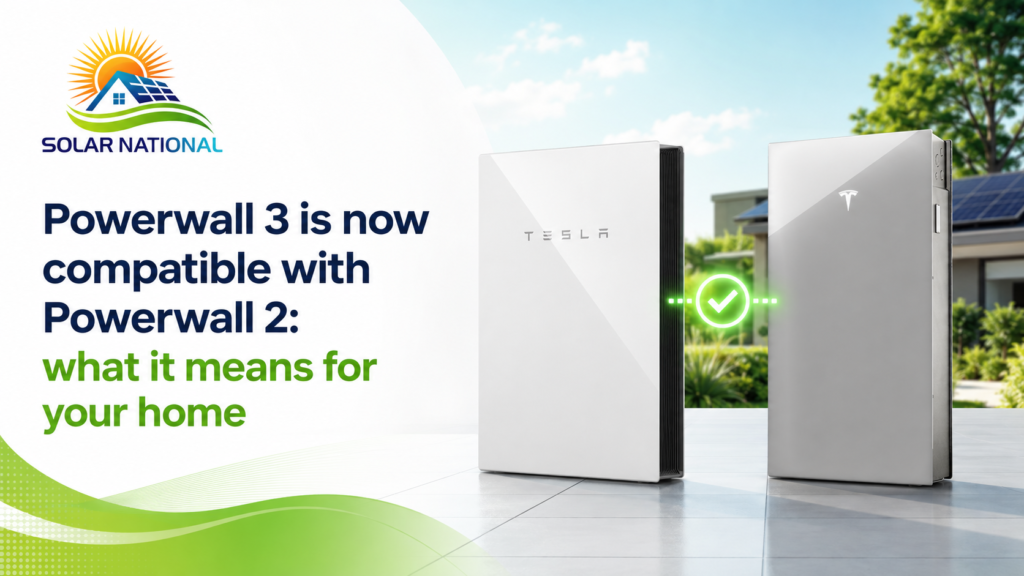
Yes, you can now add a Tesla Powerwall 3 to an existing Powerwall 2 in Australia. Tesla has switched on backwards compatibility through a software update, so the two generations run together as one home battery system, managed inside the Tesla app. No wiring changes or hardware swaps are needed on your current Powerwall 2, and your existing unit keeps working exactly as it did before.
For anyone who installed a Powerwall 2 during the 2021 to 2023 battery boom, this closes a gap that had been open since the newer model arrived. Until this update, the two products ran on different architectures and could not talk to each other, which left Powerwall 2 owners with limited ways to expand their storage. Australia and New Zealand were the first markets to receive the feature.
Can you add a Powerwall 3 to an existing Powerwall 2?
You can. The update lets a Powerwall 2 and a Powerwall 3 operate as a single combined system on the same property. Your Powerwall 2 stays in place, a Powerwall 3 (or Powerwall 3 Expansion units) sits alongside it, and both are controlled together through the app. This gives Powerwall 2 owners a genuine upgrade path for more storage and more backup power without starting again from scratch.
The compatibility itself is delivered over the air. Adding the new hardware still needs a Tesla Certified Installer, both for correct sizing and to keep everything compliant.
How many batteries can you combine in one system?
The supported setup at launch covers up to four Powerwall 2 units, one Powerwall 3 unit, and up to three Powerwall 3 Expansion units on the same site. That is a large amount of usable storage, comfortably more than most households draw on across an evening or a grid outage.
Because a Powerwall 2 holds 13.5 kWh and a Powerwall 3 also holds 13.5 kWh, even a modest expansion adds meaningful capacity for load shifting, backup, and getting more value out of your solar. The Powerwall 3 delivers up to 11.5 kW of continuous power and includes a built in solar inverter, and you can see a full breakdown in our Powerwall 3 specifications and review. A Powerwall 2, by contrast, provides a fixed 5 kW output through a separate inverter. If you are weighing an expansion against a fresh setup, it also helps to compare the Powerwall 3 against other home batteries before you decide.
What isn’t supported in a combined system?
A few older components sit outside the supported configuration, so it is worth checking your current hardware before you plan an expansion:
- Gateway 1 is not supported in the combined setup.
- Neurio meters are not supported, so sites using one will need their metering reconfigured first.
- On a three-phase grid connection, Powerwall 3 output is capped at 5 kW in a mixed configuration. This is common in larger homes and is worth raising at the design stage.
If your system uses any of these, it does not rule out an upgrade. It just means your installer will assess the setup and recommend a path before quoting.
Does adding a Powerwall 3 affect your Powerwall 2 warranty?
No. Your Powerwall 2 keeps its original warranty when you add a Powerwall 3. The new Powerwall 3 and any Powerwall 3 Expansion units come with their own 10 year warranty, so both parts of the system stay covered.
What about rebates and cost?
New Powerwall 3 and Powerwall 3 Expansion units added under this pathway can still qualify for support through the federal Cheaper Home Batteries Program, which discounts eligible home battery storage. The program moved to tiered rebate rates from 1 May 2026, so the discount now varies with system size. Tesla has also run limited time reward offers on Powerwall 3 orders, though those promotions have their own order and installation deadlines. Because both the federal rebate and any active Tesla offer change over time, confirm current eligibility and pricing with your installer before you commit.
One point of context on the older model: the Powerwall 2 was discontinued for new sales in Australia and is no longer approved for fresh installations, which is part of why this compatibility update matters. It gives existing owners a forward path even though the hardware itself is out of production.
Is this a good time to expand your battery storage?
If you already own a Powerwall 2 and have found yourself running low on stored power in the evenings, or you want stronger backup during outages, this update makes expansion far simpler than it used to be. The right size depends on your daily usage, your solar generation, whether you are on single or three-phase, and how much backup you want to hold in reserve. A quick system review will tell you which configuration fits, and the team at Solar National can map out the options for your home.
Frequently asked questions
Can I add a Powerwall 3 to my Powerwall 2 in Australia?
Yes. Tesla has enabled backwards compatibility in Australia through a software update, so a Powerwall 3 can be added to an existing Powerwall 2 and the two run together as one system.
Do I need to replace my Powerwall 2 to install a Powerwall 3?
No. Your Powerwall 2 stays as it is with no hardware changes. A Powerwall 3 is added alongside it, and a software update links them into a single combined system.
How many Powerwall units can I have in one home?
The supported configuration allows up to four Powerwall 2 units, one Powerwall 3, and up to three Powerwall 3 Expansion units on the same site.
Will combining a Powerwall 2 and Powerwall 3 work on a three-phase home?
It can, but on a three-phase grid connection the Powerwall 3 output is limited to 5 kW in a mixed system. Have your installer confirm the sizing before you proceed.
Does adding a Powerwall 3 void my Powerwall 2 warranty?
No. The Powerwall 2 keeps its original warranty, and the Powerwall 3 and any Expansion units carry a separate 10 year warranty.
Why couldn’t Powerwall 2 and Powerwall 3 work together before?
The two generations use different designs. The Powerwall 2 is AC-coupled with an external inverter, while the Powerwall 3 has a built in inverter and different firmware, so they previously operated as separate product lines until this update bridged them.
Can I still get a battery rebate when adding a Powerwall 3?
New Powerwall 3 and Expansion units may qualify under the federal Cheaper Home Batteries Program, which shifted to tiered rates on 1 May 2026. Rebate amounts change over time, so confirm current eligibility with your installer.