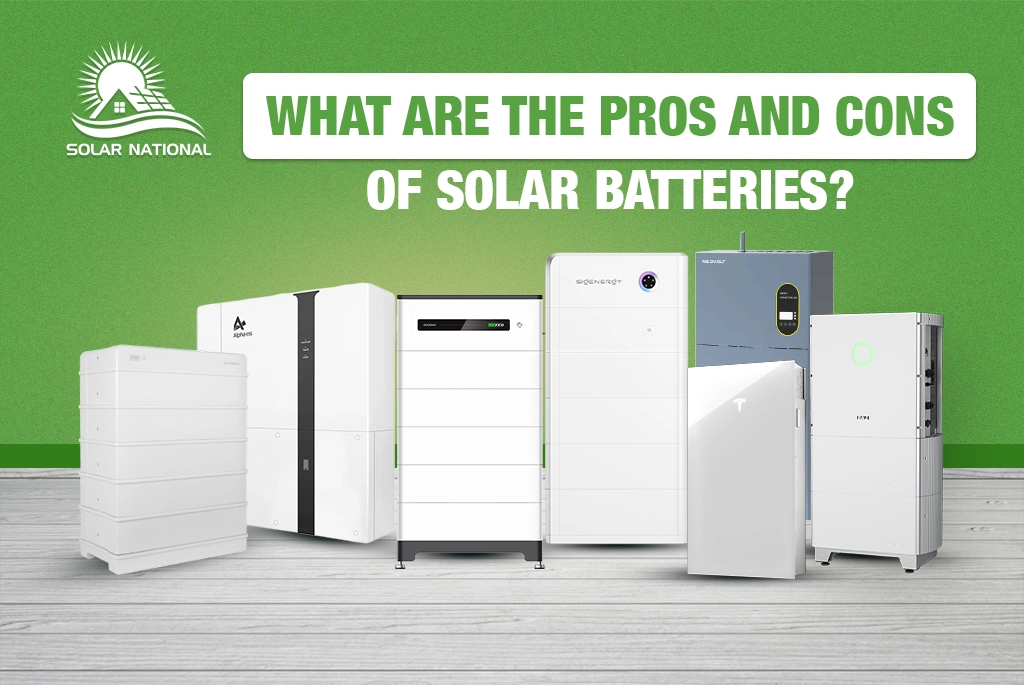
Homeowners and businesses across Australia are increasingly pairing rooftop solar panels with energy-storage batteries. A solar battery stores surplus electricity produced during daylight hours for use later at night or during an outage. It gives property owners more control over the electricity they generate, reduces reliance on the grid, and can even provide income through feed-in tariffs or virtual power plant (VPP) schemes.
However, batteries are not without drawbacks. They involve a significant upfront cost, and their environmental footprint depends on how they are manufactured and recycled. This article from Solar National looks at how solar batteries work, the main types available, the advantages and disadvantages of installing one in a Sydney home, and answers frequently asked questions. It draws on independent research and government information from 2024–2025 to help you decide whether a solar battery is right for you.
How a Solar Battery Works
A solar battery forms part of a solar-plus-storage system. Rooftop solar panels generate electricity during the day. The electricity is used first to run appliances and charge any connected battery; only excess energy is exported to the grid. Energy stored in the battery can then be discharged in the evening or during a blackout. According to the Australian Government’s energy portal, electricity generated by a solar system may be used for self-consumption, sent to the electricity grid, or used to charge a battery. Self-consumption is the most valuable because retail electricity rates are usually higher than feed-in tariffs. Batteries therefore maximise the value of each kilowatt-hour produced by your panels.
Main Battery Chemistries
There are several battery chemistries on the market:
-
- Lithium-ion (Li-ion): The most popular option for residential solar because of high energy density, long cycle life, and low maintenance. Models include lithium iron phosphate (LFP) and nickel-manganese-cobalt (NMC). These batteries support fast charging and are relatively lightweight.
-
- Lead-acid: An older and cheaper technology used in off-grid systems. They are heavy, require regular maintenance, and have a shorter lifespan compared with Li-ion, making them less common in new installations.
-
- Flow batteries: These store energy in tanks of liquid electrolyte. They offer long lifespans and deep discharge capability but have lower energy density and higher installation costs. Flow batteries are more suitable for large-scale or commercial projects.
-
- Hybrid or lithium-titanate: Emerging chemistries promise faster charging and improved cycle life. Costs remain high but may fall as the technology matures.
Most homeowners in Sydney opt for lithium-ion batteries because they deliver a good balance of price, lifespan, and efficiency. Solar National offers guidance on matching battery chemistry to your household needs and budget.
Advantages of Solar Batteries
Energy Independence and Bill Reduction
The primary benefit of battery storage is the ability to use your own solar electricity when the sun isn’t shining. Batteries allow you to store surplus energy generated during daylight and use it after dark. This increases self-consumption and reduces the amount of electricity you need to purchase from the grid. With a time-of-use feed-in tariff, you can even export stored electricity in the evening for a higher feed-in credit. Solar National can design a system that maximises your savings.
Protection Against Blackouts
Battery storage provides backup power during grid outages. A solar-plus-storage system provides around-the-clock power and keeps appliances running when the grid goes down. This resilience is particularly valuable in bushfire-prone or storm-affected regions such as coastal New South Wales. Many modern batteries include integrated backup functionality; some require additional hardware. Solar National can design a system that automatically isolates from the grid when needed, keeping your lights on and refrigerators running during a blackout.
Peak Demand Management and Tariff Benefits
Some electricity plans include demand-charge tariffs based on the maximum power drawn from the grid. When a battery discharges during times of high demand, it can reduce the peak demand charge. Batteries also enable households to participate in virtual power plants (VPPs). These schemes aggregate many small batteries into a coordinated network that can buy and sell electricity like a traditional generator. A VPP may offer benefits such as reduced electricity prices, an upfront discount on the battery, and regular payments. Solar National partners with reputable VPP operators so clients can earn extra income from their storage systems.
Environmental Benefits and Carbon Reduction
Using battery storage extends the use of clean solar energy into the evening, reducing reliance on coal- and gas-fired generation. Storing and using solar energy contributes to reducing greenhouse gas emissions. By consuming more of your own clean energy, you lower demand for fossil-fuel-generated electricity and help Australia meet its emissions-reduction targets.
Participation in Incentives and Feed-in Programs
Australian states and territories offer rebates or zero-interest loans to encourage home battery installations. In 2025, the Federal Government launched a national battery rebate, reducing the typical payback period from over 10 years to about eight years for a typical residential system. Solar National can assist you in navigating these incentives to reduce your investment.
Reducing Curtailment of Solar Generation
Distribution network companies may restrict how much electricity you can export to the grid. Any excess energy beyond the export limit may be curtailed (wasted). A battery can store this surplus generation for later use instead of it being curtailed, ensuring that less of your solar generation goes to waste.
Disadvantages of Solar Batteries
High Upfront Cost
Solar batteries add a considerable cost to a solar installation. While the Federal battery rebate helps reduce costs, a battery still roughly doubles the price of a solar-only system. Households must weigh the financial benefits against this investment.
Lengthy Payback Period
Unlike solar panels, which generally pay for themselves in four or five years, batteries take longer to recoup their cost. Even with rebates, the battery portion of a solar-plus-storage system has a payback period of about 7.5 years in typical scenarios. In areas with low electricity prices or generous feed-in tariffs, the financial return may be marginal.
Limited Storage Capacity and Performance Degradation
Batteries have finite capacity, meaning they can only store a certain amount of energy. In prolonged periods of bad weather or high consumption, the battery may run empty before sunrise. In addition, batteries degrade over time. Major brands warrant their batteries for about 10 years, by which time they typically retain 60–80% of their original capacity. This gradual capacity fade reduces the usable storage and shortens the energy-independence window.
Maintenance and Safety Considerations
Modern lithium-ion batteries are generally safe, but they do require proper installation and monitoring. Maintenance is crucial for optimal performance and emphasises the importance of safety measures. Choosing a reputable installer such as Solar National and following manufacturer guidelines for ventilation, firmware updates, and monitoring helps mitigate these risks.
Environmental Impact of Production and Disposal
Although batteries enable greater use of renewable energy, they have environmental costs. The production and disposal of solar batteries involve resource extraction and waste management challenges. Manufacturing and disposing of batteries have environmental implications, including resource extraction and waste. Mining lithium, nickel, and cobalt can disturb ecosystems and use significant water, and improper disposal can release toxic metals. Recycling programs are improving, and some manufacturers offer take-back schemes, but large-scale recycling infrastructure is still developing. When choosing a battery, consider companies with strong sustainability practices and plan for responsible end-of-life management.
Additional Considerations for Sydney Households
Local Tariffs and Grid Conditions
Electricity tariffs and feed-in rates vary by state and retailer. Sydney (New South Wales) households often face time-of-use tariffs and lower feed-in tariffs compared with the retail rate. Batteries allow you to store solar energy for the evening peak, when tariffs are highest, improving the financial case. Additionally, New South Wales offers the Peak Demand Reduction Scheme and sometimes low-interest loans for household batteries; these incentives can shorten the payback period. It’s important to check the latest rebates and compare electricity plans.