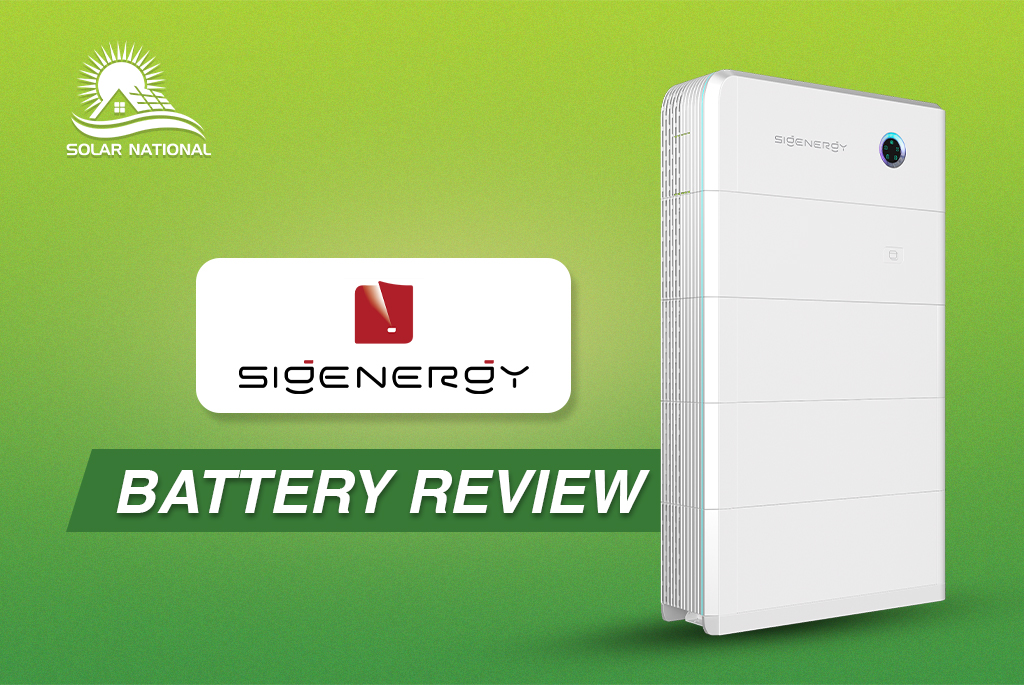
The Sigenergy battery, also known as the SigenStor system, has gained attention in the Australian solar storage market for its modular design and promising specs. With homeowners increasingly seeking reliable and scalable battery options, Sigenergy claims up to 6 kW continuous output and a usable capacity of 5 kWh per module—positioning it as a contender against rival brands.
In a recent survey of Australian solar users, 42% cited storage flexibility as their top purchase driver. Sigenergy’s multi-module capability may address this demand, while its integrated inverter promises seamless connection to existing rooftop systems. This review assesses whether Sigenergy meets expectations in performance, durability, and value.
What Is the Sigenergy SigenStor System?
The Sigenergy SigenStor is an all-in-one residential energy storage solution, seamlessly integrating five core components into a single modular unit:
- Hybrid inverter (converts solar DC to usable AC, with output options up to 25 kW)
- Battery Power Conversion System (PCS) to manage charge/discharge
- Battery modules scalable from 5 kWh to 48 kWh per stack
- Optional DC EV charger, enabling vehicle-to-home (V2H) or grid (V2G) applications
- Energy Management System (EMS), powered by smart algorithms via the mySigen app
Modularity stands out — homeowners can start with a single 5 kWh module and expand up to six modules (48 kWh), supported by DC-DC optimisers that maintain performance as capacity grows. The entire setup is IP66-rated, ensuring resilience in harsh outdoor conditions.
This combined hardware–software architecture fosters a cohesive ecosystem: the integrated inverter, CPU-level energy control, and app-based insights enable users to fine-tune self-consumption, backup, and EV charging strategies. Digital real-time monitoring through mySigen means performance adapts with evolving energy needs.
How Does the Sigenergy Inverter Perform?
The Sigenergy inverter, embedded within the SigenStor system, functions as a hybrid inverter, meaning it manages both solar input and battery storage. It supports high DC input (up to 25 kW across models) and operates on multiple MPPTs, which helps maximise solar efficiency even with shading or varied panel angles.
For Australian homes, this is especially valuable because of how roof orientations differ. With 98.5% peak efficiency and fast switchover during outages (<10 ms), the Sigenergy inverter ensures stable backup supply without manual intervention .
A standout feature is the fully integrated design — users don’t need separate inverters or external monitoring systems. It communicates directly with the energy management system and adapts to energy demands, battery levels, and even EV schedules.
The inverter is certified to Australian standards (AS4777.2:2020), supporting grid compliance, feed-in, and blackout protection. It’s also compatible with both single-phase and three-phase configurations, making it suitable for a wide range of properties.
How Scalable Is the Sigenergy Battery?
One of the biggest advantages of the Sigenergy battery system is its modular design. Each SigenStor stack can hold up to six individual battery modules, each offering 5 kWh of usable capacity. This allows a single stack to deliver up to 30 kWh (or 48 kWh gross) per unit, scalable for homes with higher energy needs or future expansion plans.
This modular approach gives homeowners flexibility to start small and grow over time. For example, a household might begin with two modules (10 kWh) and expand as energy usage or solar input increases. Sigenergy allows up to five SigenStor stacks to be installed in parallel, supporting an enormous 150 kWh usable capacity—sufficient for large residential or even small commercial setups.
The battery chemistry is Lithium Iron Phosphate (LiFePO₄), known for thermal stability, long cycle life (6,000+ cycles), and better safety under Australian heat conditions. Each module features independent control and monitoring, supported by DC-DC optimisers that isolate faults and enhance lifespan.
For bushfire-prone or blackout-affected areas, this scale and control give the system a significant reliability edge. The IP66 waterproof/dustproof rating also enables outdoor installation without enclosures.
How Durable Is the Sigenergy Battery in Australian Conditions?
The Sigenergy battery system is built with durability in mind, particularly for Australia’s demanding climate. Its IP66 rating means it’s protected from dust, heavy rain, and even coastal salt exposure—making it ideal for both metro and remote installations. The battery operates effectively between -20°C and 55°C, covering all Australian weather extremes from Darwin’s heat to Victoria’s winters.
One key point that stands out in real-world user reviews is the system’s heat dissipation design. Sigenergy uses active air cooling combined with intelligent load balancing, helping the batteries avoid thermal strain during extended summer usage or in enclosed spaces.
Moreover, the battery’s long lifecycle — 6,000+ full charge-discharge cycles — equates to around 15–20 years of regular use. It also comes with a 15-year warranty, which includes performance guarantees (minimum 70% capacity retention) and parts coverage.
For homes affected by frequent outages or grid instability (especially in outer suburbs or regional areas), the battery’s rapid switch-over time and built-in surge protection make it a reliable backup. The system also integrates surge control, arc fault detection, and cell-level monitoring to prevent system-wide failures.
What’s the Price of the Sigenergy Battery and Is It Worth It?
Pricing for the Sigenergy battery varies depending on configuration, installer, and location, but a typical 10 kWh system (2 battery modules + hybrid inverter + EMS) installed in Australia starts from $10,000 to $13,000, including GST and installation. Each additional 5 kWh module adds roughly $2,000–$2,500, depending on installer margins and shipping.
While this may seem higher than some entry-level batteries, Sigenergy’s all-in-one approach reduces the need for additional components like separate inverters, communication units, and monitoring systems. The system also qualifies for local rebates and Small-Scale Technology Certificates (STCs) under the Australian Renewable Energy Target.
Eligible homeowners may also benefit from the federal government’s solar battery rebate schemes, which can reduce upfront costs further, depending on your state or territory. Over 15 years, a fully utilised system can save thousands in electricity bills—especially if used for peak shaving or VPP participation. For example, a Brisbane household on a time-of-use tariff could cut annual bills by $1,200–$1,800 with an optimised battery setup.
So is it worth it? For tech-forward homeowners wanting flexibility, long-term security, and minimal maintenance, the upfront cost is balanced by long-term returns—particularly in states like SA, NSW, and QLD where solar incentives and uptake are strongest.
What Are the Pros and Cons of the Sigenergy Battery?
Like any solar storage solution, the Sigenergy battery offers a mix of benefits and trade-offs. Here’s a realistic breakdown based on current performance data and Australian user experiences:
✅ Pros
- Modular & scalable: Add or remove battery modules based on evolving needs—up to 150 kWh with five stacks.
- Integrated inverter: No need for external hybrid inverters; setup is neater and more cost-effective long-term.
- Smart energy control: Real-time app-based insights, intelligent load scheduling, and remote troubleshooting via mySigen.
- Australian-ready design: IP66-rated, operates in extreme temperatures, and built with LiFePO₄ chemistry for stability.
- Warranty coverage: 15 years, including 6,000+ cycle support and 70% minimum capacity retention.
❌ Cons
- Higher initial cost: Starting prices are premium compared to basic battery systems.
- Limited installer network: Not all solar retailers offer Sigenergy yet—fewer choices for comparison.
- EV charger is optional: Some households may be surprised that the EV integration is not standard.
While the system is robust and innovative, it may not be the best fit for budget-conscious users or small households with limited daily energy consumption.
Final Verdict: Is the Sigenergy Battery a Good Choice?
The Sigenergy SigenStor system stands out in a market filled with generic battery options. Its blend of modular battery storage, built-in hybrid inverter, smart monitoring, and EV readiness gives homeowners a futureproof energy setup. While the upfront cost is above average, the long-term control, flexibility, and warranty coverage justify the price for most medium to large households.
If you’re in the market for a premium solar battery solution that scales with your energy needs—and you value digital management, safety, and resilience—Sigenergy is among the top-tier options currently available in Australia. For personalised advice and expert installation, visit Solar National to learn more.
FAQ:
What is the Sigenergy battery?
The Sigenergy battery is a modular lithium iron phosphate (LiFePO₄) energy storage system integrated with a hybrid inverter, suitable for residential and small commercial solar setups. It offers flexible capacity scaling from 5 kWh to 150 kWh and includes app-based energy management, EV charging support, and blackout protection.
Is the Sigenergy battery available in Australia?
Yes, the Sigenergy battery is available in Australia through selected solar installers. It meets Australian standards (AS4777.2:2020), is IP66-rated for outdoor use, and qualifies for local solar rebates and feed-in schemes.
How much does the Sigenergy battery cost?
A standard 10 kWh Sigenergy battery system in Australia costs between $10,000 and $13,000 including installation. Additional battery modules are priced around $2,000–$2,500 each, depending on supplier and location.
What inverter is used in the Sigenergy system?
The Sigenergy SigenStor system includes a built-in hybrid inverter supporting up to 25 kW of DC input. It has multiple MPPTs, rapid switch-over for backup power, and integrates directly with the energy management system and EV charger.