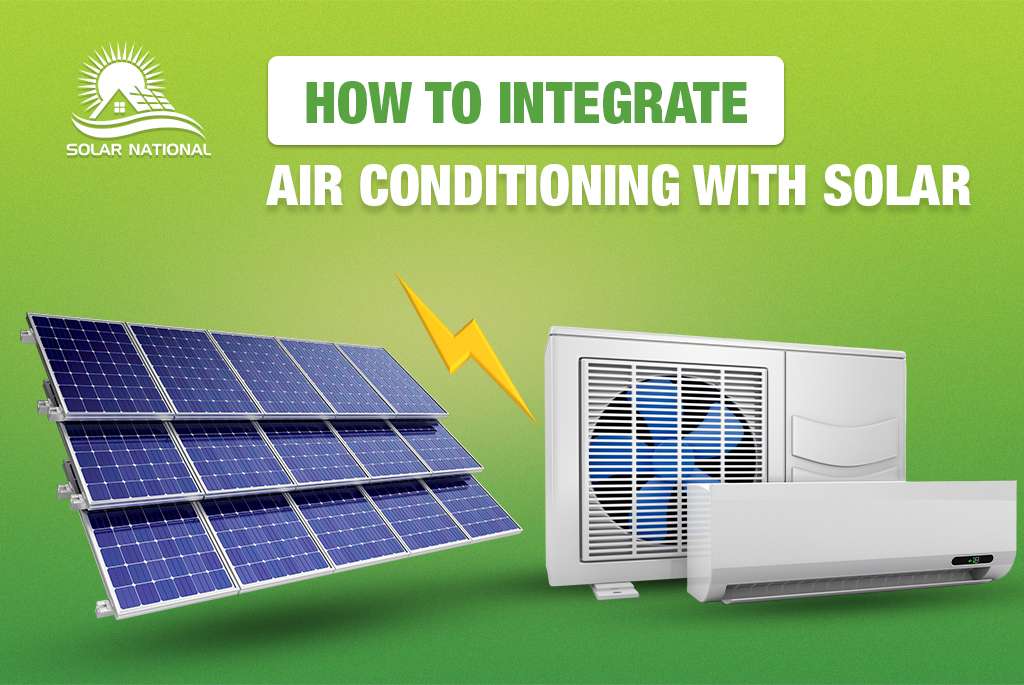
Running air conditioning is one of the biggest contributors to household electricity use in Australia, particularly during summer. As power prices rise, more homeowners are asking how to integrate air conditioning with solar to reduce running costs without sacrificing comfort.
The good news is that modern solar systems can support both heating and cooling effectively. When designed correctly, solar powered air conditioning can significantly cut grid reliance and improve overall energy efficiency. This guide explains how integration works, what to consider, and how Australian homes can get the best outcome.
Why air conditioning and solar work well together
Air conditioning demand often peaks during daylight hours, especially on hot afternoons. This aligns closely with solar energy production, which means much of the electricity needed to cool a home can be generated on-site.
Key reasons solar and air conditioning pair well include:
- Solar panels produce the most power when cooling demand is highest
- Daytime self-consumption reduces grid imports
- Modern inverter systems manage loads efficiently
- Energy savings increase as electricity prices rise
For households with residential air conditioning, solar offers a practical way to manage ongoing running costs rather than limiting usage.
Can you run air conditioning directly from solar panels?
Yes, but the system still uses the grid unless batteries are installed.
In practical terms, solar panels generate electricity that powers your home first, including the air conditioner. If solar output is insufficient, extra power is drawn from the grid automatically. Without batteries, excess solar is exported rather than stored. This setup still delivers savings, as daytime cooling is largely offset by solar generation, especially with correctly sized systems.
Step 1: Assess your cooling needs
Before integrating air conditioning with solar, it’s important to understand how and when your system is used. Not all households have the same cooling profile.
Consider:
- Number of air conditioning units
- Type (split system, ducted, reverse-cycle)
- Typical operating hours
- Summer versus winter usage
Homes with ducted or multiple split systems may require larger solar arrays to maximise benefits. Accurate load assessment prevents undersizing and ensures the system delivers real savings.
Step 2: Size the solar system correctly
One of the most common issues highlighted in competitor content is undersized solar systems. While a small system can still reduce bills, it may not fully support air conditioning loads.
As a general guide:
- Single split systems often pair well with 6.6kW solar
- Larger homes with ducted systems may need 8kW–10kW or more
- Orientation and shading affect output
System design should focus on daytime performance, as this is when solar powered aircon delivers the greatest benefit.
Does solar powered air conditioning work at night?
No, solar panels do not produce power at night without battery storage.
However, the broader context matters. Solar still reduces total daily consumption by offsetting daytime cooling. At night, the system draws from the grid unless a battery is installed. Some households use pre-cooling strategies during the day to reduce evening demand. Batteries can extend solar benefits, but they are not essential for meaningful savings.
Step 3: Choose energy-efficient air conditioning
Integration works best when the air conditioner itself is efficient. Older systems often consume more electricity than necessary, reducing the impact of solar.
When selecting residential air conditioning, look for:
- High energy star ratings
- Inverter-driven compressors
- Zoning options for ducted systems
- Smart thermostats and timers
Upgrading air conditioning at the same time as solar installation often delivers better results than adding solar to an inefficient system.
Step 4: Consider smart energy management
Smart inverters and monitoring platforms allow homeowners to track generation, usage and exports in real time. This visibility helps adjust behaviour to maximise solar use.
Examples include:
- Running air conditioning during peak solar hours
- Adjusting temperature setpoints slightly
- Scheduling cooling before evening demand
These small changes can noticeably improve outcomes without affecting comfort.
Is it worth installing solar and air conditioning at the same time?
Yes, combining installations can improve system design and reduce overall costs.
When solar and air conditioning are planned together, electrical infrastructure can be optimised from the start. This avoids rework and ensures the solar system is sized for real usage. Many households find the combined approach delivers better long-term savings, especially when replacing older cooling systems with efficient modern alternatives.
Step 5: Understand the role of batteries
Batteries are optional but useful in certain situations. They store excess solar for later use, including evening cooling.
Batteries are most beneficial when:
- Evening air conditioning use is high
- Feed-in tariffs are low
- Grid reliability is a concern
For many households, solar alone delivers most of the benefit. Batteries can be added later if usage patterns change.
How much can solar reduce air conditioning costs?
Solar can offset a large portion of daytime air conditioning costs, depending on system size and usage.
In real-world conditions, households that align cooling with solar production often see substantial reductions in summer electricity bills. Savings depend on how much power is self-consumed rather than exported. Homes with flexible usage patterns tend to benefit the most from solar powered air conditioning.
Common mistakes to avoid
Based on competitor analysis, the most frequent issues include:
- Installing undersized solar systems
- Ignoring shading and roof orientation
- Using inefficient air conditioning units
- Assuming batteries are mandatory
Avoiding these mistakes requires proper assessment and experienced system design rather than focusing on headline prices alone.
Integrating air conditioning with solar for Australian homes
Australia’s climate makes the combination of solar and air conditioning particularly effective. Long sunny days and high cooling demand create ideal conditions for self-generation.
For homeowners exploring solar powered aircon, working with a provider that understands both solar design and household energy behaviour is critical. Solar National focuses on designing solar systems that support real-world usage, helping homeowners reduce reliance on the grid while maintaining comfort year-round.
Final thoughts
Integrating air conditioning with solar is not about eliminating grid use entirely. It’s about reducing reliance, controlling energy costs and using power more intelligently. When systems are sized correctly and air conditioning usage is aligned with solar generation, solar powered air conditioning becomes a practical, long-term solution for Australian households rather than a short-term saving tactic.
With thoughtful planning, the combination of solar and efficient residential air conditioning can deliver year-round comfort, lower electricity bills and greater energy confidence. This is the approach taken by Solar National, where system design focuses on real household usage and long-term performance, not just upfront installation.
FAQ:
Can air conditioning run effectively on solar power?
Yes, air conditioning can run effectively on solar during daylight hours.
In practice, solar panels supply electricity to your home first, including your air conditioner, before any excess is exported to the grid. When cooling is used during peak solar production, grid reliance drops significantly. At night or during low solar output, the system automatically draws from the grid unless battery storage is installed.
Do I need batteries for solar powered air conditioning?
No, batteries are not required for solar powered air conditioning to deliver savings.
Most benefits come from using air conditioning during the day when solar generation is highest. Batteries simply allow unused solar to be stored for later use. For many Australian households, a well-sized solar system without batteries still offsets a large portion of cooling costs during summer.
What size solar system is best for running air conditioning?
The ideal solar system size depends on your air conditioner type and usage patterns.
Homes with a single split system often benefit from systems around 6.6kW, while larger homes with ducted air conditioning may require 8kW or more. Roof orientation, shading and daily usage timing also matter. Proper system sizing ensures solar supports cooling loads without unnecessary oversizing.
Does solar powered air conditioning work in winter?
Yes, solar powered air conditioning can support winter heating as well.
Reverse-cycle air conditioners used for heating consume electricity, just like cooling. During sunny winter days, solar can offset a portion of this demand. While shorter daylight hours reduce output compared to summer, solar still contributes to lower overall energy costs across the year.
Is it worth installing solar and air conditioning together?
Yes, installing solar and air conditioning together often leads to better outcomes.
When both systems are planned at the same time, solar can be sized to match real cooling and heating demand. Electrical upgrades can also be streamlined, reducing future costs. This integrated approach typically delivers better long-term savings than adding solar to an existing, inefficient air conditioning setup.