The Australian federal government’s “Cheaper Home Batteries Program,” a new initiative aimed at making home battery systems more affordable, officially commenced on July 1, 2026.
The rebate provides up to $372 per usable kilowatt-hour (kWh) battery capacity, translating to approximately a 30% reduction in installation costs. A standard 11.5 kWh battery system could mean savings of around $4,000. This program reduces upfront costs and encourages the adoption of renewable energy solutions nationwide.
Key Facts of Federal Government Solar Battery Rebate 2026
-
- Rebate Available from: July 1, 2025
-
- Max Rebate: $372 per usable kWh of battery storage
-
- Expected Savings: ~$4,000 savings on standard 11.5-13.5 kWh battery systems
-
- Eligibility: Homes, small businesses, community facilities
-
- Stackable: Can be combined with state battery rebates
-
- Eligibility: Available to all eligible property owners
-
- Install now, claim later: Systems installed before July 1 are eligible for a rebate if switched on after the rebate applies.
What is the Federal Government Solar Battery Rebate?
The Federal Government Solar Battery Rebate 2026 is a financial incentive to make solar energy storage more affordable for Australian homeowners and small businesses. From July 1, 2025, eligible individuals can claim a rebate on installing a solar battery system, significantly reducing out-of-pocket expenses as outlined by Australian Government. The primary objective of this rebate is to accelerate the adoption of renewable energy storage, ensuring that more households can store and use solar energy efficiently.
Under this rebate, homeowners can receive up to $372 per usable kilowatt-hour (kWh) battery capacity installed. For instance, if you install an 11.5 kWh battery, you could save nearly $4,000. The rebate amount may vary based on battery size and location, but it generally covers around 30% of the battery installation cost. This makes transitioning to renewable energy much more affordable and practical for many Australians.
Federal Battery Rebate Eligibility Criteria
Who is Eligible for the Federal Battery Rebate 2026?
To qualify for the Federal Government Solar Battery Rebate 2026, applicants must meet several eligibility criteria to ensure the rebate is directed toward those who can benefit most. The key eligibility requirements are as follows:
Who Is Eligible?
The federal battery rebate is available to:
- Homeowners (including landlords and owner-occupiers)
- Small businesses
- Community facilities (e.g. sports clubs, libraries, community centres)
Owners of multiple eligible properties can apply for a separate rebate for each location, provided that each property has its own individual electricity meter, also known as the National Metering Identifier (NMI).
Battery System Eligibility Requirements
To qualify for the rebate under the “Cheaper Home Batteries Program,” your battery system must meet the following criteria:
- Nominal Capacity: The battery system must have a nominal capacity between 5–100 kWh. This ensures that the system can store a sufficient amount of energy to meet your needs.
- Usable Capacity: The rebate covers up to 50 kWh of usable capacity, meaning the portion of the battery’s capacity that is available for discharge and use.
- New System: The battery system must be brand new. Second-hand or refurbished systems are not eligible for the rebate to ensure quality and reliability.
- Installation Location: The system can be installed either on-grid or off-grid, depending on your circumstances.
- Off-grid systems: Must be located at least 1 km from a main grid line. If a system is closer than this, you may incur high costs for connecting to the grid, which could exceed $30,000.
- Virtual Power Plant (VPP) Capability: On-grid systems must be VPP-capable. VPPs aggregate multiple home battery systems into a collective virtual power plant, enabling the system to contribute to grid stability and energy market trading.
- Solar System Integration: The battery must be connected to either a new or existing rooftop solar system. This integration ensures efficient energy storage and usage from renewable sources.
- Approved Equipment: The battery and its associated inverter must be listed on the Clean Energy Council (CEC) approved product list, ensuring the equipment meets safety, quality, and performance standards.
Eligibility for Additional Batteries on Existing Systems
If you are looking to add extra batteries to an already installed system, your new setup may still qualify for the rebate, provided it meets the following conditions:
- Previous Rebate Status: The existing system must not have previously claimed the federal rebate. If the original system already received a rebate, additional batteries are not eligible for further claims under this program.
- Additional Battery Capacity: The new batteries must add at least 5 kWh of capacity to the existing system. However, the total nominal capacity of the entire system, including the additional batteries, must remain under 100 kWh to remain eligible for the rebate.
- CEC-Approved System: The combined system, including both the new and existing batteries, must form a compliant system that is listed on the Clean Energy Council’s approved product list. This ensures that all components meet safety and performance standards.
- System Re-certification: The updated system, with the added batteries, must be re-certified by an installer accredited by the Standards Australia (SAA). This process ensures that the system meets the latest safety and regulatory standards, confirming that it is safe to operate.
- Rebate Eligibility: Only the new battery modules qualify for Small-scale Technology Certificates (STCs), which are used for claiming rebates. Rebates cannot be claimed on pre-existing capacity. This ensures that the financial support is directed towards the newly added components, not the original system.
These criteria ensure the rebate is accessible to those genuinely interested in enhancing their renewable energy capabilities while maintaining safety and quality standards.
How to Claim / Who Applies the Discount
Claiming the Solar Battery Rebate
The process for claiming the Federal Government Solar Battery Rebate is straightforward and convenient. You don’t need to apply directly to the government. Instead, approved retailers and installers, like Solar National, will apply the rebate up-front on your invoice during the purchase and installation process. This means you receive the rebate instantly, reducing the upfront cost of your battery system.
Who Handles the Rebate?
Your accredited installer, such as Solar National, will manage the entire process. Once you’ve selected your solar battery system, your installer will apply the rebate directly to your invoice, ensuring that the discount is reflected in the total cost of your installation.
Alternative Option
Alternatively, if you prefer to handle the rebate process yourself, you can register and sell Small-scale Technology Certificates (STCs) through the REC Registry. However, most homeowners find it easier to take advantage of the point-of-sale discount, as it’s more convenient and saves you time.
How Much Can You Save with the Federal Battery Rebate?
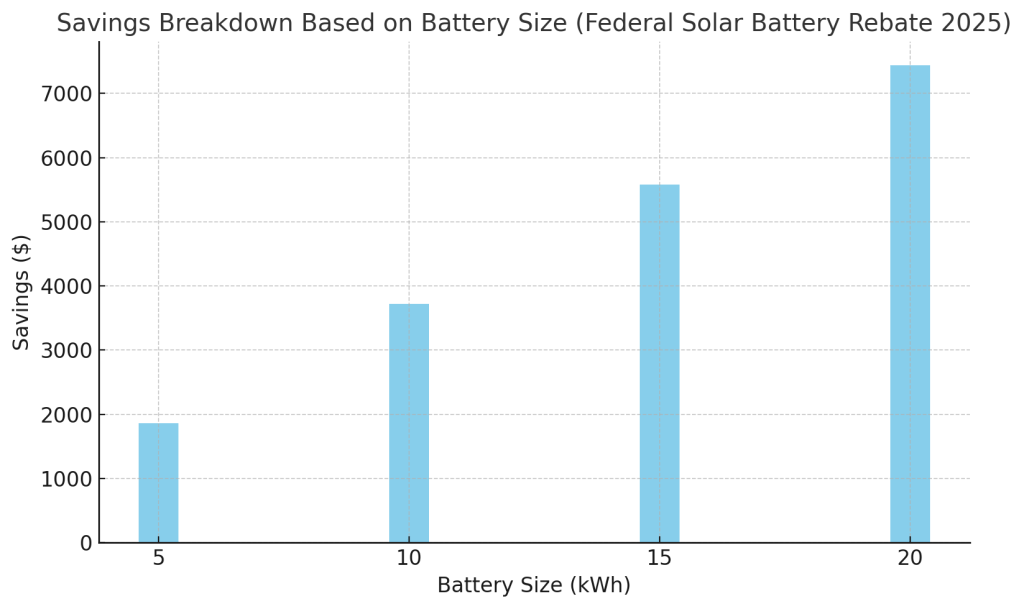
The savings you can achieve through the 2026 Federal Government Solar Battery Rebate depend primarily on your installed battery size. The rebate offers up to $372 per usable kilowatt-hour (kWh) battery capacity. Here’s a breakdown of potential savings based on battery size:
-
- 5 kWh Battery: Save up to $1,860 (5 kWh x $372)
-
- 10 kWh Battery: Save up to $3,720 (10 kWh x $372)
-
- 15 kWh Battery: Save up to $5,580 (15 kWh x $372)
-
- 20 kWh Battery: Save up to $7,440 (20 kWh x $372)
A 10-15 kWh battery is usually sufficient for an average Australian household, making this rebate substantially reduce the initial installation cost. For instance, if a 10 kWh battery typically costs around $12,000, the rebate could lower the cost to around $8,280.
It’s also important to note that your savings can vary depending on the specific battery model you choose, installation costs, and any other local incentives that may apply.
Estimate Your Rebate with the Federal Battery Calculator
To calculate your potential savings under the 2026 solar battery rebate, multiply your desired battery’s usable capacity by the rebate rate of $372 per kWh.
Example Calculation:
-
- Battery Size: 10 kWh
-
- Rebate Value: 10 kWh × $372 = $3,720
You can also use online battery rebate calculators provided by state energy websites to get an accurate estimate based on your location and battery size.
Battery Costs After Federal Rebate: Popular Brands Compared
Here’s an example of how popular solar battery brands can cost after applying the federal rebate:
| Battery Model | Estimated STCs¹ | Average Price² | Federal Rebate³ | Net Price |
|---|---|---|---|---|
| Tesla Powerwall 3 | 126 | $14,175 | $4,662 | $9,513 |
| Sungrow SBR096 | 85 | $9,576 | $3,145 | $6,431 |
| Alpha ESS Smile 5 | 84 | $9,524 | $3,108 | $6,416 |
| BYD Battery-Box LVS 12 | 107 | $12,075 | $3,959 | $8,116 |
| LG Chem RESU 12 | 109 | $12,285 | $4,033 | $8,252 |
| Enphase IQ Battery 5P | 47 | $5,250 | $1,739 | $3,511 |
| Growatt APX 10.0P | 84 | $9,450 | $3,108 | $6,342 |
| Goodwe Lynx Home F G2 S12.8 | 119 | $13,440 | $4,403 | $9,037 |
| SigenStor Single-Phase 13 | 121 | $13,650 | $4,477 | $9,173 |
| NeoVolt Solar Battery | 110 | $11,500 | $4,092 | $7,408 |
The estimated price is above. Contact Solar National today to get the best solar battery quote in Sydney.
How to Apply for the Federal Battery Rebate 2026?
Applying for the 2026 Federal Government Solar Battery Rebate is a straightforward process, but following the correct steps is essential to ensure your application is successful. Here’s a concise, step-by-step guide:
-
- Check Eligibility: Ensure you meet all eligibility criteria, including having an existing solar panel system, owning the property, and choosing an approved battery system.
-
- Choose an Approved Installer: Select a Clean Energy Council (CEC) accredited installer registered under the rebate program. This guarantees that your installation meets industry standards.
-
- Get Quotes: Obtain quotes from multiple approved installers. This will help you compare prices and choose the best value for your battery system.
-
- Complete the Application: Visit the official government website for the solar battery rebate program and complete the online application form. Ensure all information is accurate and complete.
-
- Submit Required Documents: Please provide all necessary documents, including proof of property ownership, details of your existing solar system, and the quote from your chosen installer.
-
- Receive Approval: Once your application is reviewed, you will receive confirmation of your rebate approval. This may take a few weeks, so be patient.
-
- Install the Battery System: Schedule the installation with your chosen CEC-accredited installer after receiving approval.
-
- Claim Your Rebate: The rebate amount is usually deducted from the total cost of your battery installation, meaning you pay the reduced price directly.
By following these steps carefully, you can ensure a smooth application process and maximise your rebate savings.
Top Benefits of Installing a Solar Battery with the Rebate
Installing a solar battery system using the 2026 Federal Government Solar Battery Rebate offers several advantages, making it a wise investment for homeowners and businesses. Here are the key benefits you can expect:
1. Significant Cost Savings
The rebate can reduce battery installation costs by up to 30%, with savings of up to $4,000 for a typical 11.5 kWh system. This means a lower upfront cost for adopting solar energy storage.
2. Energy Independence
A solar battery allows you to store excess solar energy generated during the day and use it at night, reducing your reliance on the grid. This leads to lower electricity bills and greater control over your energy consumption.
3. Backup Power During Outages
With a solar battery, your home can maintain power during grid outages. This is especially beneficial for those in areas prone to blackouts or for critical devices that must always remain powered.
4. Reduced Carbon Footprint
By storing and using your own solar energy, you decrease your dependence on fossil fuel-generated electricity, making your household more environmentally friendly.
5. Enhanced Property Value
Homes equipped with solar and battery systems are often more attractive to buyers. The rebate makes adding this valuable asset to your property more affordable.
6. Protection Against Rising Electricity Prices
With a solar battery, you can avoid peak electricity rates by storing solar power during expensive periods. This long-term saving strategy makes your energy costs more predictable.
7. Support for a Greener Grid
By storing your own solar energy, you reduce demand on the grid during peak times, supporting Australia’s transition to a cleaner, renewable energy future.
These benefits demonstrate why the 2026 Federal Government Solar Battery Rebate is a valuable opportunity for homeowners looking to enhance their energy security while saving money.
Can the Federal Solar Battery Rebate Be Combined with State Incentives?
Yes — but it depends on your state or territory. Here’s how it works in 2026:
Western Australia
Stackable, WA residents can combine the federal rebate with the WA Home Battery Scheme, offering:
- Up to $3,800 for Horizon Power customers
- Up to $1,300 for Synergy customers
- Participation in a Virtual Power Plant (VPP) is required.
- Eligible households may also apply for interest-free loans up to $10,000.
New South Wales
Not stackable (previously)
The NSW battery rebate ended on 30 June 2025. However, from 1 July, a new VPP incentive of up to $1,500 is available and can be combined with the federal rebate.
Victoria
Not stackable
Victoria’s Solar Battery Loan program has closed. Only the federal rebate applies for eligible systems installed after this.
Northern Territory
Not stackable
The Home and Business Battery Scheme has reached its funding cap.
Only the federal rebate is available at this time.
Community and Small Business Support
The rebate is not limited to residential properties. Small businesses with existing solar systems can also benefit. This helps small enterprises lower operating costs, enhance energy independence, and contribute to environmental sustainability.
Common Mistakes to Avoid When Applying for the Rebate
While the 2026 Federal Government Solar Battery Rebate offers substantial savings, many applicants make mistakes that can delay their approval or reduce their benefits. Here are the most common mistakes to watch out for:
1. Not Verifying Eligibility Requirements
Some applicants rush into the process without confirming if they meet the eligibility criteria, such as having an existing solar system or being the property owner.
2. Choosing Non-Accredited Installers
Only battery systems installed by Clean Energy Council (CEC) accredited professionals qualify for the rebate. Hiring a non-accredited installer can make you ineligible for the rebate.
3. Failing to Obtain Multiple Quotes
Settling for the first installer you find may cost you more. Always get multiple quotes from approved suppliers to ensure competitive pricing.
4. Incorrect Documentation
Submitting incomplete or incorrect documents, such as outdated property ownership proof or an invalid installation quote, can delay your application.
5. Overlooking Battery Specifications
Not all batteries are eligible for the rebate. Make sure your chosen battery meets the program’s safety and quality standards.
6. Delaying the Application Process
Waiting too long to apply may result in missing out on the rebate if the program reaches its funding limit. Start the application process early to avoid disappointment.
7. Misunderstanding Rebate Calculation
Some applicants mistakenly believe the rebate covers 100% of battery costs. The rebate only covers a portion (up to $372 per kWh), so calculate your final costs accurately.
8. Not Reading the Terms and Conditions
Each state may have specific rebate guidelines. To avoid misunderstandings, always review the latest terms and conditions on the official government website.
By avoiding these mistakes, you can ensure a smooth and successful rebate application process, maximising your savings.
Conclusion
The Federal Government Solar Battery Rebate 2026 is a game-changer for Australian homeowners and small businesses looking to embrace renewable energy. This rebate can significantly reduce your upfront costs by covering up to $372 per kilowatt-hour of battery capacity, making solar battery storage more accessible. Whether you want to achieve energy independence, lower your electricity bills, or simply contribute to a greener environment, this rebate provides an excellent opportunity.
However, to maximise your savings, it is crucial to follow the application process correctly, avoid common mistakes, and choose a Clean Energy Council (CEC) accredited installer like Solar National. Proper planning allows you to transform your home or business into a sustainable energy powerhouse while enjoying substantial financial benefits. Start exploring your options today with Solar National and secure your share of the 2026 solar battery rebate.
Frequently Asked Questions About the Solar Battery Rebate 2026
What is the Federal Government Solar Battery Rebate 2025?
The Federal Government Solar Battery Rebate 2025 is an incentive program that offers Australian homeowners and small businesses a rebate of up to $372 per kilowatt-hour (kWh) of usable battery capacity to reduce the cost of installing a solar battery system.
Who is eligible for the solar battery rebate?
To qualify, you must be an Australian resident, own the property where the battery will be installed, have an existing solar panel system, and use a Clean Energy Council (CEC) accredited installer.
How much can I save with the rebate?
The rebate can save up to 30% of your battery installation cost. For example, a 10 kWh battery could receive a rebate of up to $3,720.
Can I get the rebate if I don’t have solar panels yet?
No, the rebate is specifically for solar battery storage and requires an existing solar panel system on the property.
Is the rebate available across all Australian states and territories?
Yes, the rebate is a federal program, making it available nationwide. However, some states may have additional battery incentives that you can stack with the federal rebate.
How do I apply for the rebate?
You can apply online through the official government rebate website by submitting your property details, existing solar system information, and a quote from a CEC-accredited installer.
Can I apply for the rebate multiple times?
No, each property is eligible for only one rebate. Multiple rebates for the same property are not permitted.
Are all battery brands eligible for the rebate?
No, the battery must meet Australian safety standards and be installed by a CEC-accredited installer to qualify.
What happens if the rebate funding runs out?
If the funding limit is reached, no further rebates will be issued until the government allocates additional funds.
Can businesses also apply for the rebate?
Yes, small businesses with existing solar systems can apply for the rebate, just like residential property owners.