



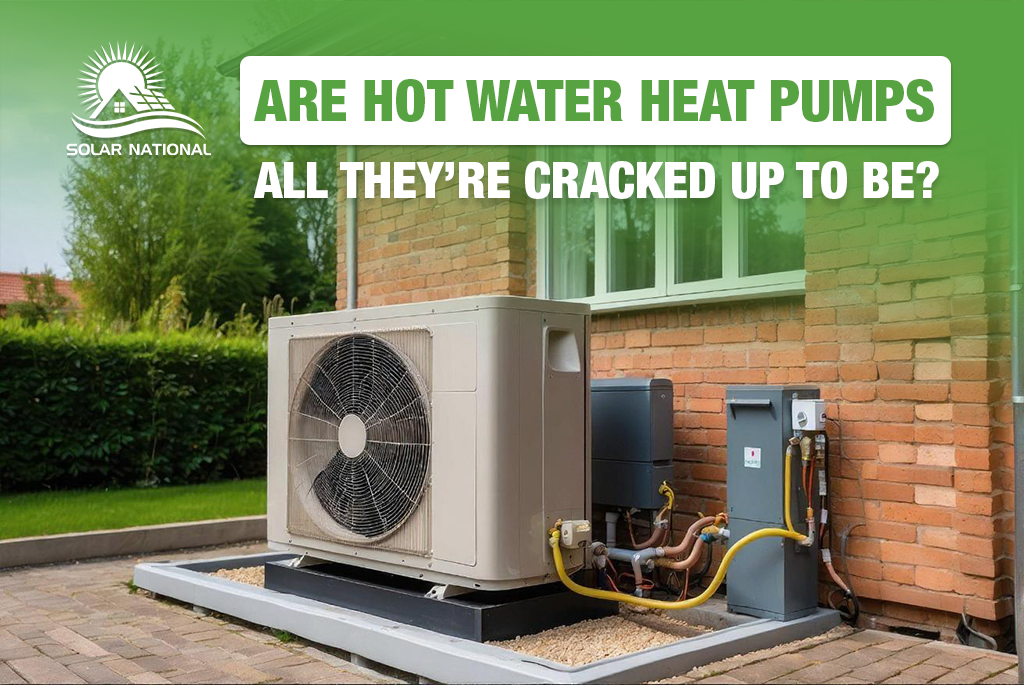
Australia’s appetite for energy-efficient technology has never been stronger, and hot water heat pumps are quickly becoming the talk of the town. They promise lower energy bills, eco-friendly operation, and long-term savings — but are they really worth the investment? Let’s explore what makes heat pumps better than conventional systems, the real-world pros and cons, and whether this technology suits your home and climate.
What is a Hot Water Heat Pump?
A hot water heat pump is a smart system that uses electricity to extract heat from the surrounding air and transfer it into water — similar to how a reverse-cycle air conditioner works. Instead of generating heat directly, it moves it efficiently, which is why it can be up to three times more energy-efficient than traditional electric or gas systems.
At Solar National, we’ve seen a significant shift among Australian households toward heat pumps because they align perfectly with solar systems — reducing both running costs and environmental impact.
Are Heat Pumps Better Than Traditional Systems?
In most cases, yes. Heat pumps are generally better for energy efficiency, especially when paired with solar panels. They consume less electricity because they move heat rather than create it, making them more cost-effective and sustainable over time. However, like any system, their performance can depend on local climate and installation quality.
In short: heat pumps can cut energy use by up to 65% compared to electric storage systems, making them a strong contender for any Australian household focused on sustainability.
How Do Heat Pumps Compare to Air Conditioners?
When comparing heat pump vs air conditioner, both rely on the same refrigeration cycle, but they serve different purposes. Air conditioners transfer heat to cool or warm the air, while heat pumps transfer heat into water for storage and use.
If you already have solar power, pairing it with a hot water heat pump means your system uses clean energy for both air and water heating, amplifying your overall efficiency and savings.
Heat Pump vs Gas Furnace: Which Is More Efficient?
A heat pump vs gas furnace comparison usually highlights efficiency and cost. Heat pumps operate on renewable heat transfer, while gas furnaces rely on combustion. That means heat pumps can achieve efficiencies above 300%, whereas gas furnaces rarely exceed 90%.
In practical terms, households using a gas hot water system might spend more each month, especially with rising gas prices. Over a few years, the difference in running costs can offset the heat pump installation cost, making it a more sustainable long-term choice. (~70 words)
What Are the Benefits of a Heat Pump System?
The residential heat pump benefits go beyond efficiency — they improve comfort, reduce emissions, and integrate well with solar. Here’s what makes them stand out:
- Energy savings: Uses up to 70% less electricity than electric storage systems.
- Low running costs: Especially economical when powered by solar panels.
- Eco-friendly operation: Reduces greenhouse gas emissions compared to gas.
- Consistent performance: Works efficiently across varying temperatures.
- Quiet and compact design: Modern units run quietly, making them ideal for suburban homes.
- Government rebates: Eligible for federal and state energy-efficiency incentives.
At Solar National, our experts assess each home’s energy profile to ensure you’re choosing the right size and type for optimal performance.
What Are the Disadvantages of Heat Pumps?
While efficient, heat pumps aren’t perfect. Here are the main considerations:
- Initial cost: The upfront heat pump installation cost can be higher than a traditional electric or gas system, though rebates and solar pairing can offset this.
- Climate sensitivity: In very cold regions, performance may drop slightly, but most modern systems in Australia are designed to operate efficiently year-round.
- Installation quality: Poor placement or incorrect setup can reduce efficiency and shorten lifespan.
- Noise levels: Although quieter than older models, positioning the unit away from bedrooms or neighbours is best practice.
At Solar National, we ensure each installation is tailored to maximise performance, efficiency, and lifespan, taking your home’s layout and location into account.
How Much Does a Heat Pump Cost to Install?
The heat pump installation cost in Australia typically ranges from $2,500 to $5,000, depending on brand, size, and site complexity. If you’re pairing it with solar panels or replacing an older system, you may qualify for rebates through the Small-Scale Technology Certificates (STCs) scheme, reducing your out-of-pocket expenses.
Tip: Choosing an experienced installer, like Solar National, ensures proper system sizing, warranty coverage, and energy optimisation — key to maximising your long-term return on investment.
Are Heat Pumps Worth It in Australia?
Yes — for most Australian households, heat pumps are worth it, particularly when integrated with solar energy systems. They excel in moderate to warm climates, which covers most of Australia, and deliver excellent energy efficiency with minimal environmental impact.
The takeaway: If your goal is lower power bills, reduced carbon emissions, and dependable year-round performance, a hot water heat pump is one of the smartest home upgrades available today.
Pairing Heat Pumps with Solar Panels
Combining a heat pump with your solar energy system is where the magic happens. By using solar-generated electricity to power the pump, you’re heating water for free during daylight hours. This approach reduces your reliance on the grid and accelerates your payback period.
At Solar National, we design systems that seamlessly integrate solar and hot water heating, creating a fully optimised renewable energy solution for your home.
Maintenance and Longevity
Heat pumps generally require minimal maintenance. Regular checks on filters, airflow, and refrigerant levels are enough to keep the system running efficiently. With proper installation and care, most units last 10–15 years or longer, offering dependable performance throughout their lifespan.
By scheduling routine service with a qualified technician, homeowners can ensure long-term efficiency and safeguard their warranty coverage.
Why Choose Solar National?
At Solar National, we specialise in energy-efficient solutions for Australian homes, including heat pumps, solar panels, and battery storage systems. We handle everything from consultation and installation to maintenance and support.
Our team recommends only proven brands that deliver performance, warranty reliability, and efficiency tailored to Australian conditions. When you partner with Solar National, you get long-term value, expert advice, and a system built to save energy for years to come.
Yes. Heat pumps are significantly more energy-efficient than electric or gas storage systems because they move heat instead of creating it. This efficiency can cut energy use by up to 65%, lowering running costs while reducing your home’s carbon footprint. When combined with solar power, heat pumps become one of the most cost-effective hot water solutions available in Australia.
The heat pump installation cost typically ranges between $2,500 and $5,000, depending on brand, capacity, and site setup. While the upfront cost may seem higher than a standard system, government rebates and solar compatibility can offset much of that expense. With proper installation, homeowners often recover the investment through energy savings within just a few years.
The main downsides include higher initial cost, slightly reduced efficiency in cold climates, and noise from the compressor unit. However, newer models are designed for Australian conditions and operate quietly with improved performance. When installed correctly and paired with solar, the benefits—such as energy savings and reduced emissions—far outweigh these drawbacks.
Absolutely. When powered by solar panels, heat pumps can heat water using renewable energy, reducing your grid reliance and operating costs. This combination allows homeowners to maximise solar production during the day while storing hot water for later use—making it one of the smartest sustainable home upgrades available through Solar National.
Yes. For most households, heat pumps offer the best balance of comfort, energy efficiency, and sustainability. They’re ideal for Australia’s moderate climate, and when paired with solar energy, they can dramatically reduce power bills and environmental impact. Over their 10–15-year lifespan, they deliver consistent performance and excellent long-term value.