



At Solar National, we speak with Australian homeowners every week who are weighing up their hot water options. Heat pump hot water systems have moved from a niche product to a mainstream upgrade and the Emerald Energy heat pump is one of the brands that comes up in these conversations more than almost any other. So we decided to put together an honest, detailed look at what the Emerald range actually delivers, who it suits, and where it has room to improve. If you’re shopping for an energy-efficient hot water system and want real information rather than marketing speak, this Emerald heat pump review is for you.
Hot water can account for up to 30% of your household’s total electricity bill. With grid prices continuing to climb, switching to a heat pump hot water system is one of the highest-return efficiency upgrades an Australian homeowner can make. The Emerald heat pump hot water system sits in the mid-range of the market but does it deliver on its efficiency promises? Read on.
Who Is Emerald Energy?
Emerald Energy is an Australian-owned business that has been operating since 2006. While manufacturing takes place in China consistent with the vast majority of heat pump brands sold in Australia the systems are designed and engineered locally. Beyond hot water heat pumps, Emerald also sells air conditioning units and smart home energy technology, which speaks to their long-term commitment to the Australian energy efficiency market.
At Solar National, we consider brand longevity an important factor in the heat pump hot water space. A company that has traded in Australia for nearly two decades is far more likely to honour warranty claims and provide ongoing parts support than a brand that appeared in the last couple of years. On this measure, Emerald holds up well.
Emerald Heat Pump Models Available in Australia
The Emerald hot water range is split into two categories: all-in-one units and split systems. Both use R290 propane refrigerant and DC inverter technology, though the features differ between the two.
All-in-One Heat Pump (EE-HWS-A1 Series)
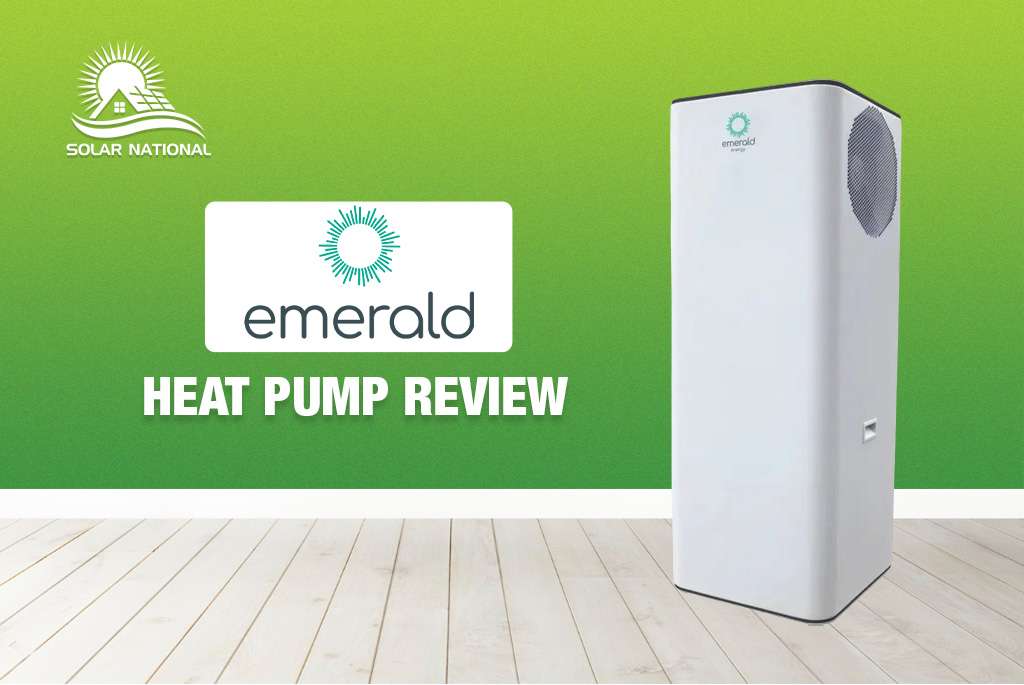
This is the model most commonly installed across Australia. The all-in-one design combines the heat pump and the tank into a single upright unit with a clean rectangular profile a step away from the bulky cylindrical shape most people associate with older hot water systems. Available tank sizes are:
- 220 litres — recommended for households of 3 to 4 people
- 270 litres — suitable for 4 to 5 person households
- 320 litres — designed for larger families of 5 to 8 people
Each all-in-one model includes built-in Wi-Fi and can be managed via the Emerald smartphone app. An optional 1.6kW electric boost element is available across all sizes, which steps in automatically during periods of high demand or cold weather. The Solar National team installs all three sizes across metropolitan and regional areas, and in our experience, the 270L is the most popular choice for the average Australian family.
Split System Heat Pump
The split system separates the storage tank from the outdoor heat pump unit, which allows for more flexibility in installation placement. The tank can sit close to where hot water is used most, reducing heat loss through longer pipe runs while the outdoor unit is positioned away from bedrooms or living areas. Tank options are 200L and 300L. The split system also uses R290 refrigerant with a claimed COP of 4.9, and it operates in ambient temperatures between -15°C and +46°C.
One limitation worth flagging: the split system doesn’t have app connectivity. Controls are handled via a panel on the outdoor fan unit. For homeowners who want smart scheduling to sync with a rooftop solar system, the all-in-one model is the better fit.
Emerald Heat Pump Specifications at a Glance
- Coefficient of Performance (COP): 4.5 to 4.9 (manufacturer-stated)
- Refrigerant: R290 (propane) — Global Warming Potential of just 3
- Compressor brand: Highly — a Hitachi joint venture
- Operating temperature range: -15°C to +46°C
- Noise output: ~45 dB (all-in-one)
- Tank recovery rate: approximately 78 litres per hour
- Tank material: Carbon steel with Blue Diamond enamel coating
- Anti-Legionella protection: Automatic and manual disinfection modes
- Wi-Fi / app control: Yes (all-in-one models only)
- Built-in timer: Yes
- Optional electric boost element: 1.6kW
The R290 refrigerant used in Emerald systems is one of the most environmentally sound refrigerants available for residential heat pumps. With a Global Warming Potential of only 3, it is significantly cleaner than older refrigerant types like R134a (GWP: 1,430) or R410A (GWP: 2,088), and aligns with the direction that Australian and global environmental regulations are heading. For homeowners who want genuine eco-credentials from their hot water system, this matters.
Energy Efficiency and Real-World Savings
The COP (Coefficient of Performance) is the single most useful number when comparing heat pump hot water systems. A COP of 4.5 means the system delivers 4.5 kWh of heat energy for every 1 kWh of electricity it consumes more than four times the output of a conventional electric resistance hot water system, which runs at a COP of 1.
For the average Australian household spending around $1,100 per year on electric hot water, switching to an Emerald heat pump can reduce that cost by approximately $900 to $1,300 per year depending on your tariff, household size, and usage patterns. Over ten years, that’s a substantial sum well in excess of $9,000 in avoided costs for many families.
Solar National Tip: Pair your Emerald heat pump with a rooftop solar system and schedule heating between 10am–3pm to heat water almost entirely for free using your own generated power.
This solar-pairing capability is where the Emerald heat pump hot water system genuinely shines. The app lets you set precise heating windows to overlap with your solar generation peak, which means grid electricity plays almost no role in your daily hot water costs. The Solar National team can configure this correctly during installation so it’s working from day one no fiddling with settings required on your end.
What Are Australian Homeowners Actually Saying?
Based on close to 200 reviews on Product Review, the Emerald all-in-one heat pump carries a rating of approximately 4.6 out of 5. Consistent positive themes across those reviews include:
- Noticeably quieter operation compared to older hot water systems
- Significant drops in quarterly electricity bills often visible from the first bill
- Effective app control for solar-integrated households
- Responsive customer support team, including prompt warranty replacements
The common criticisms cluster around a few areas. The ‘smart actions’ feature in the Emerald app is regularly described as confusing, with some owners finding the scheduling interface less intuitive than they expected. A subset of reviewers also encountered Wi-Fi pairing issues with the controller at the time of installation. On the positive side, Emerald’s support team has generally stepped in to resolve these issues; there are accounts of warranty replacements being processed within three working days.
One thing to keep in mind: the Emerald range has only been widely available in Australia for around two years. Long-term reliability data the kind that comes from units that have been running for five or more years simply doesn’t exist yet. This isn’t a knock against the brand, but it’s a relevant consideration when making a 10 to 15-year investment decision. As Emerald’s Australian installation base grows, so too will the depth of the reliability picture.
Warranty Coverage and Maintenance Requirements
Emerald provides a 5-year warranty on the heat pump and tank and 2 years of labour and service coverage. Compared to the broader Australian heat pump market, this is a reasonable but not exceptional offering. Brands like Haier cover the unit for 7 years; iStore offers a longer labour warranty period. If maximum warranty depth is your deciding factor, those alternatives have the edge.
On maintenance: Emerald’s owner manual requires the Temperature and Pressure Release (TPR) valve to be tested every six months. Unlike most other brands which allow homeowners to perform this check themselves Emerald’s documentation specifies it should be carried out by a licensed plumber. This is an ongoing cost that other brands don’t require. It’s also worth understanding that failure to follow the maintenance schedule as written could affect your warranty standing.
The Solar National team is happy to walk you through the full maintenance picture before you commit to a purchase. Understanding the ongoing obligations of any heat pump hot water system, not just the upfront price is an important part of making the right long-term decision for your home.
Emerald Heat Pump Installed Cost and Government Rebates
Fully installed, an Emerald heat pump hot water system typically costs between $3,300 and $4,100, placing it firmly in the mid-range of the Australian market. The exact figure depends on your location, the tank size you choose, and any additional work required at your property.
Emerald systems are eligible for Small-scale Technology Certificates (STCs) under the federal government’s Small-scale Renewable Energy Scheme. These certificates reduce your upfront cost and are applied at the point of sale when you use a registered installer which the Solar National team is. Depending on your state, additional rebates may also apply:
- Victoria: The Solar Homes Program includes rebates for heat pump hot water systems for eligible households
- New South Wales: The Energy Savings Scheme (ESS) provides incentives for approved efficient hot water upgrades
- Queensland, SA, and WA: Various state-based efficiency programs may apply depending on income and property eligibility
Talk to Solar National before you purchase. Our team will assess which rebates and incentives apply to your specific postcode and household situation, and handle all the paperwork so you’re not leaving money on the table.
Our Verdict: Is the Emerald Heat Pump Right for Your Home?
The Emerald Energy heat pump hot water system is a legitimate mid-market option that delivers on the fundamentals. The DC inverter technology, R290 refrigerant, wide operating temperature range, and solar-compatible app control make it a well-rounded performer particularly for households in temperate to warm Australian climates who want to maximise the return from an existing rooftop solar system.
The areas where it falls slightly short are warranty duration (5 years versus the 7 years offered by some competitors) and the TPR valve maintenance requirement, which adds a recurring plumber cost that most alternative brands don’t impose. These aren’t dealbreakers, but they’re worth knowing before you sign off.
At Solar National, we supply and install a range of heat pump hot water systems including Emerald and can help you compare it side by side with other brands that may suit your home even better. Our job is to match the right system to your household, not to push a particular brand. If the Emerald is the best fit, we’ll tell you. If something else stacks up better for your specific situation, we’ll tell you that too.
Frequently Asked Questions:
Can the Emerald heat pump work in cold climates like Tasmania or Victoria?
Yes. Emerald’s all-in-one and split systems are rated to operate in ambient temperatures down to -15°C, which covers all Australian climate zones including Tasmania, alpine Victoria, and elevated areas of New South Wales and Queensland. The optional electric boost element provides backup heating during extended cold spells or unusually high-demand periods.
Does installing an Emerald heat pump qualify for government rebates?
Yes. Emerald heat pump hot water systems are eligible for STCs under the federal Small-scale Renewable Energy Scheme. Additional state-based rebates may apply depending on where you live. Solar National handles all rebate paperwork as part of the installation process; you don’t need to do it yourself.
What size Emerald heat pump hot water system do I need?
The 220L model is generally suited to 3 to 4 person households; the 270L works well for 4 to 5 people; and the 320L is designed for families of 5 to 8. If you have a large bath, a spa, or frequently host overnight guests, sizing up is always the safer call.
How does the Emerald heat pump work with solar panels?
The Emerald app allows you to programme heating cycles to run during your peak solar production window usually between 10am and 3pm. This means the heat pump runs on solar-generated power rather than grid electricity, slashing or eliminating your hot water running costs. Solar National can set this up correctly during installation.
Where can I get an Emerald heat pump installed in Australia?
Solar National supplies and installs Emerald heat pump hot water systems across Australia. Get in touch for a free quote and one of our team will assess your home, confirm which rebates apply, and recommend the right model for your household size and usage.